

Congress MP's Son Among Hundreds Affected in Major Media Restructuring
In a significant blow to the journalism industry, Ishaan Tharoor, the son of prominent Congress MP Shashi Tharoor, has lost his position at The Washington Post as part of sweeping layoffs affecting approximately 300 journalists at the storied publication. The newspaper, owned by Amazon founder Jeff Bezos, has implemented drastic cuts that represent nearly one-third of its newsroom staff, marking a profound contraction for the media institution.
Personal Announcement on Social Media
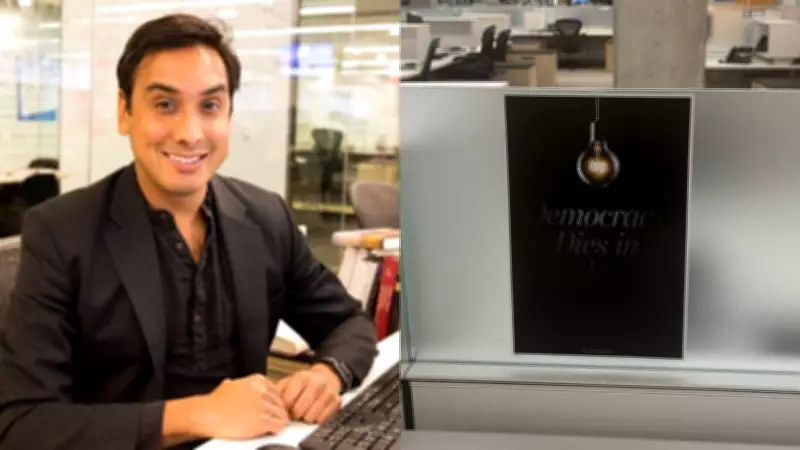
Ishaan Tharoor, who served as a senior columnist covering international affairs and launched the influential WorldView column in January 2017, confirmed his departure through emotional posts on social media platform X. In one poignant message, he shared an image from the newsroom featuring the newspaper's iconic slogan, "Democracy Dies in Darkness," with the simple caption: "A bad day."
In a subsequent post, Tharoor elaborated on the difficult situation, writing: "I have been laid off today from The Washington Post, along with most of the International staff and so many other wonderful colleagues. I'm heartbroken for our newsroom and especially for the peerless journalists who served the Post internationally." His father, Shashi Tharoor, later reshared the initial post, amplifying the personal impact of these professional developments.

Widespread Impact Across Newsroom
The layoffs represent a comprehensive restructuring affecting multiple departments at The Washington Post. According to reports from The New York Times, the cuts impacted teams across:
- International coverage desks
- Metro reporting teams
- Editing departments
- Sports coverage units
Notably, the newspaper has completely shut down its sports desk, wound up several foreign bureaus, and ended its books coverage. These measures come shortly after the publication scaled back its coverage of the 2026 Winter Olympics, reflecting ongoing financial challenges in the media landscape.
Global Reach of the Cuts
The international scope of these layoffs became evident as journalists from around the world shared their experiences. Ukraine correspondent Lizzie Johnson posted on X: "I was just laid off by The Washington Post in the middle of a warzone. I have no words. I'm devastated." This statement highlights how the restructuring affected journalists working in critical conflict zones.
Closer to home, Pranshu Verma, who served as The Washington Post's New Delhi bureau chief, expressed his heartbreak on social media: "Heartbroken to share I've been laid off from The Washington Post. Gutted for so many of my talented friends who are also gone. It was a privilege to work here the past four years." Verma's departure underscores how these cuts have impacted the newspaper's international reporting capabilities, including its coverage of India.
Leadership Perspective on Difficult Decisions
Addressing staff about the painful restructuring, Executive Editor Matt Murray described the decision as difficult but unavoidable. According to the Associated Press, Murray explained that the newspaper needed to recalibrate in response to changing technology and evolving reader habits. "We can't be everything to everyone," he reportedly stated, acknowledging the harsh realities facing traditional media organizations in the digital age.
Founded in 1877 and purchased by Jeff Bezos in 2013 for $250 million after decades of ownership by the Graham family, The Washington Post has long been considered one of America's most influential newspapers. These recent layoffs represent one of the most significant contractions in the publication's 149-year history, reflecting broader challenges facing the journalism industry worldwide.
Ishaan Tharoor's departure, along with hundreds of his colleagues, marks a turning point for the institution and raises important questions about the future of international journalism and quality reporting in an era of rapid media transformation.






