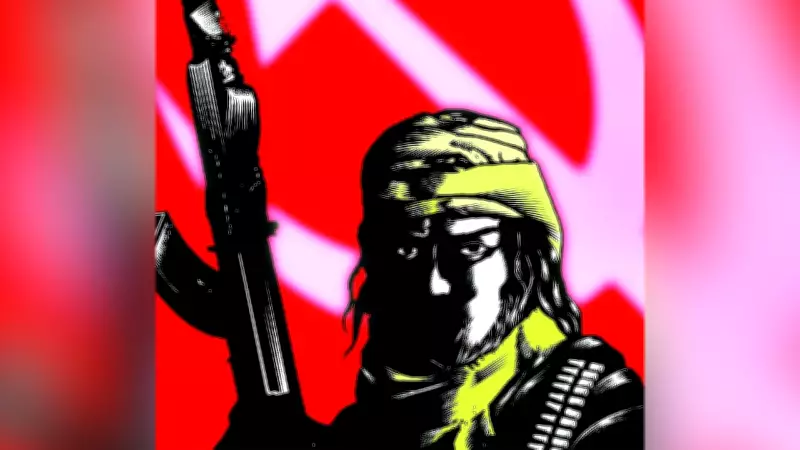
The Indian government on Friday announced a significant achievement in the nation's battle against Left-Wing Extremism (LWE), declaring that the country became effectively free from Naxalism on March 31, 2026. This milestone concludes decades of insurgency-related violence that plagued several regions.
Sustained Efforts Over 12 Years
The government attributed this outcome to sustained efforts over the past 12 years, combining security operations, development initiatives, welfare programs, and rehabilitation measures. Technology-driven interventions strengthened intelligence gathering, surveillance, and coordination among agencies. These measures led to a decline in violence, encouraged cadres to surrender, and improved access to infrastructure and public services in affected areas.
Historical Context of Left-Wing Extremism
For nearly six decades, Left-Wing Extremism posed a significant challenge in various parts of the country, especially in remote and tribal regions. The conflict affected millions, with many areas experiencing prolonged violence and limited access to development and government services.

Minister Rai reflected on the government's commitment to internal peace, stating, "India has become completely free of Naxalism as of April 2026." He emphasized that this achievement results from a sustained, zero-tolerance strategy against extremism.
Origins and Evolution of the Insurgency
The movement traces its origins to the Naxalbari uprising in West Bengal in 1967, inspired by Maoist ideology and armed revolution. Over time, several extremist groups operated across different regions before merging under the CPI (Maoist) banner in 2004. This organization became the principal face of the insurgency and one of India's most serious internal security challenges.
Peak Violence and Government Response
Official data indicates that the period between 2004 and 2014 was among the most violent phases. Violence peaked in 2010, with 1,936 incidents and 720 civilian deaths. During that decade, 17,542 incidents occurred, resulting in 1,913 security personnel and 5,019 civilian deaths.
The government noted that earlier responses were often fragmented, with states pursuing different approaches. In 2009, the Centre described Naxalism as the country's biggest internal security challenge due to its geographical spread across central and eastern India.
Shift in Strategy After 2014
When the present government assumed office in May 2014, the Red Corridor remained a major security concern. Earlier responses had largely focused on containing incidents rather than addressing underlying issues related to security, governance, and development.
A broader strategy was subsequently adopted, combining security measures with development projects, welfare interventions, improved infrastructure, intelligence-led operations, and rehabilitation schemes for surrendered cadres. This approach contributed to a sustained reduction in violence and the shrinking influence of LWE groups.
Conclusion of a Chapter
The declaration on March 31, 2026, reflects the government's assessment that Left-Wing Extremism no longer poses the scale of threat it once did, closing a chapter that shaped India's internal security discourse for decades.