Illegal Fetal Sex Determination Racket Exposed in Morena District
An illegal fetal sex determination racket has been uncovered in Morena district, once again drawing sharp attention to the region's deeply skewed sex ratio and the persistent issue of gender-based discrimination. The operation was brought to light following the vigilant intervention of a local villager, who exposed a makeshift clinic operating in a remote area.
Village Intervention Uncovers Makeshift Clinic
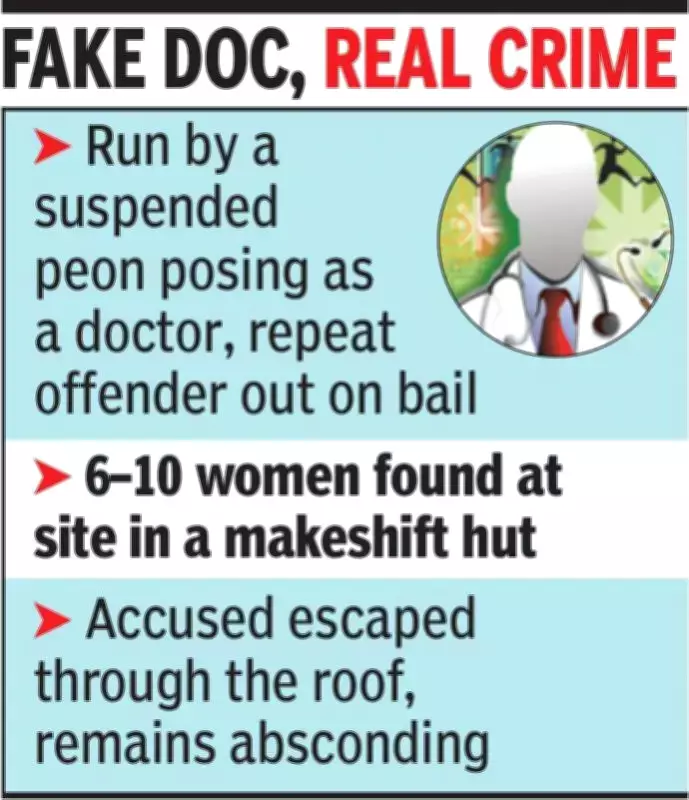
The incident occurred in Harwasi village, which falls under the jurisdiction of the Bagchini police station. According to reports, Sanjay Pachauri, a suspended school peon with a documented history of similar offences, had allegedly established a temporary facility inside a hut located along a canal. Disguising himself as a medical practitioner, Pachauri was reportedly conducting fetal sex determination tests—an act strictly prohibited under Indian law due to its direct association with female foeticide.
The racket was exposed by Vikas Sharma, a local resident who grew suspicious after observing repeated trips by a van transporting women to the isolated location. Sharma took decisive action by recording a video and entering the hut, where he discovered several women waiting while tests were allegedly being performed. He then locked the hut from the outside and promptly alerted other villagers to the illegal activities.

Chaotic Escape and Police Involvement
At the time of the intervention, approximately six to ten women were present, either awaiting or undergoing the prohibited procedure. Despite being temporarily confined inside the hut, Pachauri managed to escape by dismantling part of the thatched roof with assistance from accomplices. He fled the scene in a van, evading immediate capture.
The women involved were later dropped near Mungawali village on National Highway 552 and dispersed using various modes of transport, likely in an attempt to avoid identification and legal repercussions. Meanwhile, determined villagers pursued the fleeing vehicle and successfully intercepted the driver, identified as Rakesh Prajapati, before handing him over to the police for further investigation.
Repeat Offender and Organized Operation
Legal cases have been formally filed against Pachauri, the driver Rakesh Prajapati, and another accomplice named Vikram. Preliminary investigations have revealed that Pachauri previously worked as a peon at a CM Rise School in Jaura and was suspended in 2024 due to involvement in similar illegal activities. He has been arrested multiple times in connection with sex determination rackets and had recently been released on bail after serving a six-month prison sentence.
The driver reportedly disclosed during interrogation that he was hired for Rs 800 per day specifically to transport women to the clandestine clinic. This admission indicates that the racket functioned in an organized manner with clearly defined roles and financial arrangements, suggesting a systematic operation rather than an isolated incident.
Official Response and Societal Concerns
Morena District Collector Lokesh Jangid emphasized that strict action is being taken against all accused individuals. He confirmed that the women found at the scene would receive appropriate counselling and support. "Even as an administrator, I strongly believe this is fundamentally a societal problem that requires greater social awareness and a transformation in values. The Pre-Conception and Pre-Natal Diagnostic Techniques (PCPNDT) Act will be enforced with utmost strictness to combat such illegal practices," Jangid stated.
Women's rights activist Meena Sharma criticized what she described as systemic failures and institutional apathy. She questioned how repeat offenders like Pachauri continue to secure bail and called for more stringent legal provisions to prevent such crimes. "This case exemplifies poor coordination and a lack of effective deterrents within our legal framework. We need stronger enforcement and societal change to address the root causes of gender discrimination," Sharma asserted.

The exposure of this racket underscores ongoing challenges in combating illegal sex determination and female foeticide in regions with imbalanced sex ratios. It highlights the need for continued vigilance, stricter law enforcement, and comprehensive societal education to promote gender equality and protect vulnerable populations.