Senior Advocate HS Phoolka Joins BJP in Significant Political Move
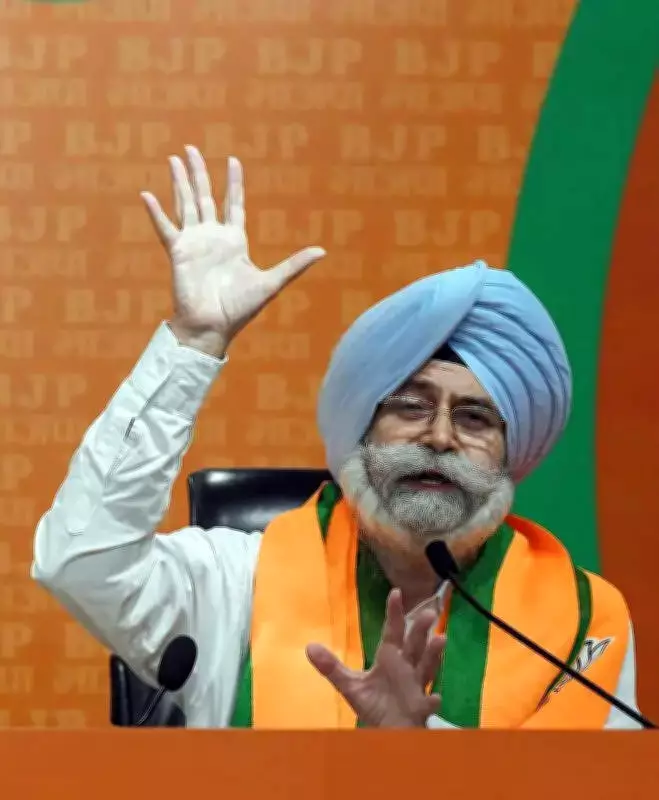
In a notable political development, senior advocate HS Phoolka, widely recognized as the prominent legal face in the battle for justice for victims of the November 1984 anti-Sikh massacre, officially joined the Bharatiya Janata Party on Wednesday. This move represents what many political observers consider the saffron party's most significant acquisition among prominent Sikh figures to date.
Decades of Advocacy and Complex Political Implications
For more than four decades, Phoolka has consistently identified himself with Sikh issues and causes, building a reputation as a steadfast advocate for the community. However, the political impact of his decision to join the BJP may not follow a straightforward trajectory. Strong apprehensions about the BJP continue to persist within substantial segments of the larger Sikh community, creating a complex political landscape.
The conventional secular-versus-communal binary often applied to the Congress and BJP holds limited meaning for Sikh voters. The community maintains a deeply painful history with the Congress party, marked not only by the military action at Darbar Sahib but also by the genocidal massacre of November 1984. Yet, this historical grievance does not automatically translate into the BJP becoming a natural political beneficiary.

Unresolved Legacy Issues and Contemporary Political Dynamics
For significant sections of the Sikh community, decades-old legacy issues concerning both Sikhs and Punjab remain unresolved, creating ongoing political tensions. The extent of these apprehensions became clearly visible during the 2024 Lok Sabha elections. By that time, the Shiromani Akali Dal had already lost a considerable portion of its traditional support base within the Sikh community.
Nevertheless, instead of shifting toward the BJP, Sikh voters largely moved toward the Congress party to block it in strategic constituencies. Simultaneously, where they had viable alternatives, Sikh voters ensured the victory of independent candidates Amritpal Singh and Sarabjit Singh, the son of Beant Singh, one of Indira Gandhi's assassins, from Khadoor Sahib and Faridkot constituencies respectively.
Historical Voting Patterns and Changing Political Equations
Historically, Sikhs voted for the BJP in Punjab primarily because of its alliance with the Shiromani Akali Dal and their profound resentment against the Congress party stemming from the cataclysmic events of the 1980s. However, after 2014, these political equations began undergoing significant transformation.
The Parkash Singh Badal-led SAD-BJP alliance government, which had returned to power in 2012, already faced mounting pressure from politically active segments of the Sikh community regarding Sikh issues, alongside governance-related criticism. In this charged atmosphere, the Aam Aadmi Party managed to effectively appropriate the Sikh political card from the SAD during the 2014 Lok Sabha elections.
AAP's Strategic Positioning and Political Maneuvering
The AAP accomplished this political maneuver by fielding Phoolka himself, along with former diplomat Harinder Singh Khalsa, who had resigned in protest against Operation Blue Star, in Punjab constituencies, and journalist Jarnail Singh in Delhi. Jarnail Singh had emerged as a prominent Sikh figure after his dramatic protest of throwing a shoe at then home minister P Chidambaram over Congress tickets to Jagdish Tytler and Sajjan Kumar during the 2009 Lok Sabha election.
Once the BJP assumed power at the central government in 2014, it also became directly accountable for its policies toward Punjab and Sikh concerns. The subsequent farm movement of 2020 further intensified political pressures, ultimately forcing the SAD and BJP to sever their long-standing alliance. The most significant political beneficiary of this rupture proved to be the AAP.

The Sikh Card and Its Political Evolution
The Sikh political card worked remarkably well for the AAP across multiple election cycles. In 2014, the party capitalized effectively on the demand for justice for 1984 massacre victims and related Sikh concerns. During the 2022 Assembly elections, it drew substantial political mileage from the Bargari sacrilege and Behbal Kalan police firing cases of 2015. However, justice in these latter cases remains elusive, and the party now faces increasing questions about its own commitment to these issues.
Fluid Political Landscape and Fragmented Leadership
Sikh politics continues to demonstrate remarkable fluidity and complexity. Many political analysts widely expected that the December 2, 2024, edict from Akal Takht would provide a crucial opportunity to reinvigorate the Shiromani Akali Dal. Interestingly, Phoolka himself had strongly advocated for strengthening the Akali Dal and had even announced his intention to take its membership.
However, political circumstances changed rapidly. The crisis surrounding the implementation of the December 2 edict ended up pulling even the Sikh clergy into its political vortex. Akali politics today remains severely fragmented, with multiple factions making rival claims and firing political salvos at one another.
Future Political Challenges and Strategic Considerations
Against this complex backdrop, political analysts suggest that more than Phoolka's individual joining, the BJP will need to comprehensively address both legacy issues and contemporary concerns if it genuinely seeks to make meaningful inroads among Sikh voters. The community's political alignment continues to evolve, influenced by historical grievances, contemporary governance issues, and strategic voting considerations that defy simple partisan categorization.