The Genesis of a Solemn Tradition: India's Two-Minute Silence on Martyrs' Day
Every year on January 30, at precisely 11 am, a profound hush descends across India as the nation observes a two-minute silence. This ritual marks Mahatma Gandhi's death anniversary and honors the countless individuals who sacrificed their lives for India's freedom. The ceremony, held at Rajghat in Delhi, sees the President, Vice President, Prime Minister, Defence Minister, and other dignitaries laying wreaths, followed by the solemn bugle call of the Last Post played by the Indian Army band. While this tradition has become an integral part of January 30, known as Martyrs' Day, its origins date back only to 1955, revealing a fascinating historical journey.
The Initial Proposal: Cariappa's Vision for Republic Day
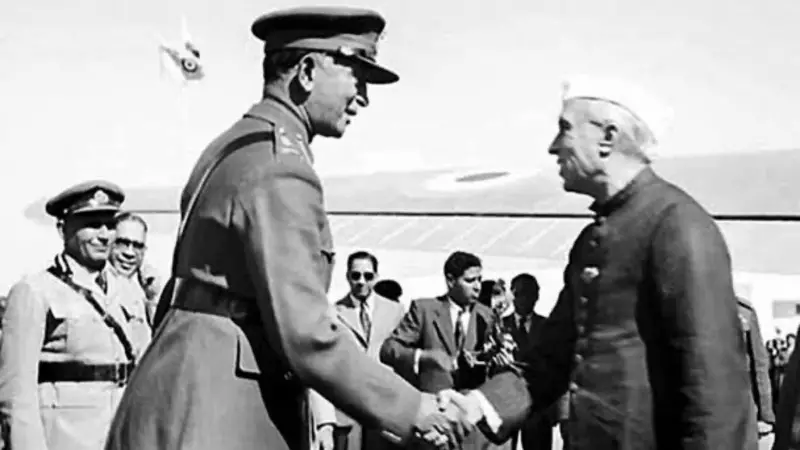
Recent documents from the Nehru Archive, a digital repository of India's first Prime Minister's writings, shed light on how this tradition began. In 1954, Field Marshal K M Cariappa, serving as the High Commissioner of India to Australia and New Zealand, wrote a letter to Jawaharlal Nehru. Dated May 14, 1954, Cariappa suggested observing a minute's silence on January 26, Republic Day, to commemorate those who died for the country's independence. He envisioned this silence occurring simultaneously across India, creating a unified moment of remembrance.
Nehru found the idea appealing but expressed doubts about its practicality for nationwide simultaneous observance. Instead, he proposed limiting it to locations where Republic Day parades were held. He referred the matter to the Coordination Committee, responsible for organizing Republic Day celebrations in New Delhi. The committee's discussions revealed mixed opinions; some members supported the proposal, while others argued that Republic Day was not suitable for such a solemn event, citing logistical challenges amidst the festivities.

Shifting to January 30: A More Fitting Tribute
As deliberations continued, some committee members suggested January 30 as a more appropriate date for the silence. Nehru agreed, seeing it as a fitting tribute on the anniversary of Gandhi's assassination. In his characteristic consultative style, Nehru wrote to all Chief Ministers, proposing a one-minute silence at 10 am on January 30, with a simple ceremony at Rajghat involving floral tributes. He emphasized the importance of halting movement and observing silence across India as far as possible.
By January 26, 1955, Nehru had made a decision, communicated to the Chief Ministers. Cariappa's original one-minute silence was extended to two minutes, and the time was set for 11 am. Nehru declared, "I would remind you that January 30 will be a Day of Remembrance for those who sacrificed their lives in the cause of India's freedom. At 11 o'clock that day there should be a two-minute silence everywhere." This marked the formal establishment of the tradition.
Refinements and Disagreements: The Evolution of the Ceremony
Over the years, Nehru continued to refine the observance. In 1958, he advised that office workers gather in groups within their workplaces for the two-minute silence, rather than observing it individually, to enhance its impact. However, Cariappa expressed dissatisfaction with certain military elements introduced at Rajghat, such as the firing of a 'feu-de-joie' and the bugle call of the Last Post. In a letter dated June 23, 1958, he argued these were out of place in the solemn atmosphere. Nehru responded the next day, defending the decision after extensive discussions.
Nehru's persistence ensured the tradition's continuity, with reminders sent to Chief Ministers and officials. His note from January 18, 1959, highlighted ongoing efforts to improve the observance in offices, suggesting small group gatherings at the strike of 11 am. This historical account underscores the collaborative and evolving nature of India's Martyrs' Day rituals, rooted in a blend of military tradition and national reverence.