

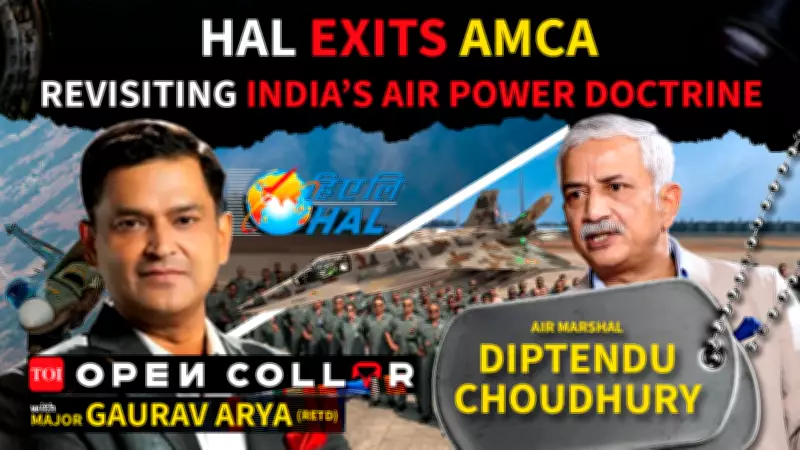
HAL's Departure from AMCA Program Triggers Strategic Overhaul of India's Air Power
In a significant development for India's defense sector, Hindustan Aeronautics Limited (HAL) has officially exited the Advanced Medium Combat Aircraft (AMCA) program. This move has prompted a comprehensive strategic reset of the nation's air power doctrine, as discussed in a detailed analysis on the Open Collar series.
Analyzing the Implications of HAL's Exit
The departure of HAL from the AMCA initiative represents a pivotal moment in India's military aviation history. This decision comes after persistent delays in the development of advanced fighter aircraft, which have compelled defense strategists to reevaluate the entire approach to air superiority. The Indian Air Force's future readiness now faces critical questions about procurement, indigenous development, and technological self-reliance.
Lessons from China's Aerospace Advancements
Air Marshal Diptendu Choudhury (Retd.), in conversation with Major Gaurav Arya, emphasized the urgent need for India to learn from China's rapid progress in aerospace technology. China's aggressive modernization of its air force and participation in recent conflicts provides crucial insights into what India must achieve to maintain regional air dominance. The gap in technological advancement between the two nations has become a pressing concern for Indian defense planners.

The Shift Toward Aerospace Dominance
The conversation highlighted India's necessary transition from traditional air power concepts to a broader aerospace dominance strategy. This encompasses not just fighter aircraft but also unmanned systems, space-based assets, and integrated network-centric warfare capabilities. The evolving battlespace demands a more comprehensive approach to air superiority that extends beyond conventional boundaries.
Challenges in Engine Technology and Private Sector Integration
A critical examination revealed persistent challenges in developing indigenous engine technology, a cornerstone of advanced fighter aircraft capabilities. Simultaneously, the discussion explored the growing role of private industry in India's defense ecosystem. The need for greater collaboration between public and private sectors has emerged as essential for accelerating technological innovation and production capabilities.
Urgent Reforms for Future Air Superiority
The analysis concluded with a call for immediate reforms across multiple domains. These include streamlining procurement processes, enhancing research and development funding, fostering international partnerships for technology transfer, and creating a more agile defense industrial base. The fast-changing nature of modern warfare requires India to implement these changes swiftly to secure its air superiority in the coming decades.
The strategic reset prompted by HAL's AMCA exit represents both a challenge and an opportunity for India's defense establishment. How the nation responds to this development will significantly shape its air power capabilities and regional security posture for years to come.






