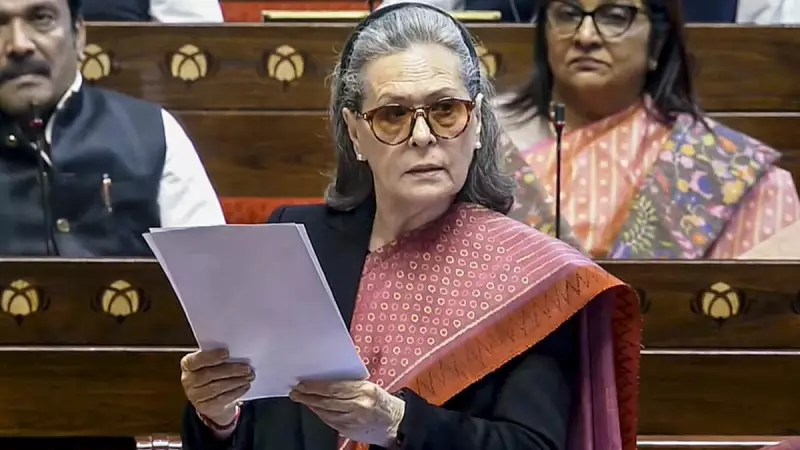
The Indian government has issued a sharp rebuke to Congress leader Sonia Gandhi regarding the handling of documents related to the country's first Prime Minister, Jawaharlal Nehru. The Centre has firmly stated that such historical records rightfully belong in the public domain and national archives, not behind closed doors.
Parliamentary Query Sparks Political Clash
This strong clarification from the government came on Wednesday, 17 December 2025. It was a direct response to a political jab made by the Congress party just a day earlier. The opposition had taken a swipe at the ruling dispensation over its official response in the Lok Sabha to a query concerning documents linked to Pandit Nehru.
The core of the dispute lies in the accessibility and custody of these significant papers. The government, represented by Union Minister Gajendra Singh Shekhawat, emphasized the principle that records of national importance, especially those pertaining to a former Prime Minister, are public property. The stance is that they should be preserved and made available through official archival systems for researchers and citizens, rather than remaining in private possession.
Government's Firm Stand on Public Ownership
The BJP-led government's position frames the issue as one of transparency and public right versus private control. By stating that the Nehru papers belong in public archives, the Centre is attempting to draw a clear ethical and administrative line. This move is seen as a counter to the Congress's criticism, turning the focus onto the Gandhi family's handling of historical documents.
The political timing is crucial, as the exchange highlights the ongoing and often bitter tussle over historical narrative and legacy between the ruling party and the principal opposition. The Nehru-Gandhi family's stewardship of Congress and its connection to India's founding history remains a potent political symbol, frequently leveraged by both sides.
Implications for Historical Legacy and Politics
This episode is more than a simple administrative disagreement; it is a battle over historical narrative. Controlling access to the papers of a foundational figure like Jawaharlal Nehru carries significant symbolic weight. The government's assertive stance seeks to project an image of itself as the guardian of public heritage, while implicitly questioning the Congress leadership's motives.
For the Congress, the initial query and subsequent criticism were likely aimed at putting the government on the defensive regarding its respect for historical figures from the opposition camp. However, the government's swift and firm retort has shifted the discourse towards accountability and public access, potentially putting the Congress leadership, particularly Sonia Gandhi, on the back foot.
The row ensures that the management of India's political history will remain a contested and lively issue in Parliament and public debate, with both parties using it to rally their bases and critique the other's commitment to democratic values and transparency.