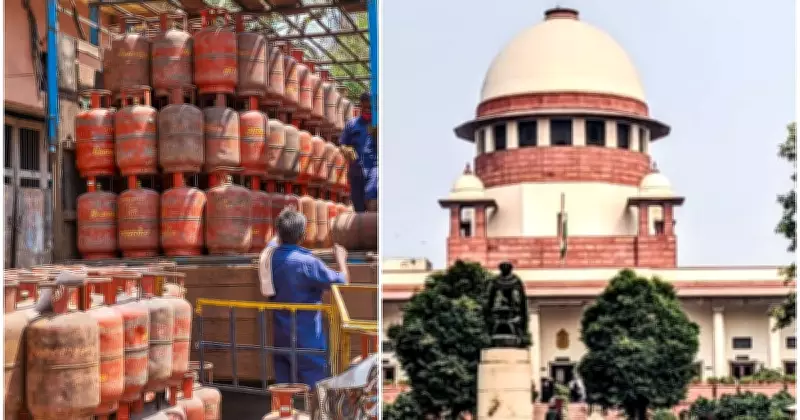
Government Elevates Supply of LPG, CNG, and Piped Cooking Gas to Top Priority
In a significant move aimed at bolstering energy security and enhancing household convenience, the Indian government has officially designated the supply of Liquefied Petroleum Gas (LPG), Compressed Natural Gas (CNG), and piped cooking gas as a top national priority. This strategic decision underscores a concerted effort to ensure reliable and accessible clean energy sources for millions of households across the country, addressing both urban and rural needs.
Supreme Court Advocates Uniform Civil Code for Women's Equal Rights
Simultaneously, the Supreme Court of India has made a pivotal statement, asserting that the implementation of a Uniform Civil Code (UCC) is the only viable pathway to guarantee equal rights for women. The court emphasized that such a code is crucial for eliminating disparities in personal laws that currently affect women's rights in matters like marriage, divorce, inheritance, and adoption, thereby promoting gender justice and equality under the law.
This dual development highlights a broader governmental and judicial focus on critical national issues. On one hand, the prioritization of gas supply aims to improve daily living standards and reduce dependency on traditional fuels, which aligns with environmental and health objectives. On the other hand, the Supreme Court's stance on the UCC reflects a deep-seated commitment to advancing women's rights and fostering a more equitable society.
The government's initiative is expected to involve enhanced infrastructure development, streamlined distribution networks, and potential policy reforms to facilitate the efficient delivery of LPG, CNG, and piped gas. This could lead to increased affordability and availability, particularly in underserved regions, contributing to energy independence and economic growth.
Meanwhile, the Supreme Court's remarks are likely to reignite debates on the Uniform Civil Code, a long-standing and contentious issue in Indian politics and society. By framing it as essential for women's equality, the court adds significant weight to calls for legislative action, potentially influencing future policy discussions and legal reforms.
Together, these announcements from the government and the judiciary signal a proactive approach to addressing both practical energy needs and fundamental human rights, setting the stage for potential transformative changes in India's socio-economic and legal landscape.