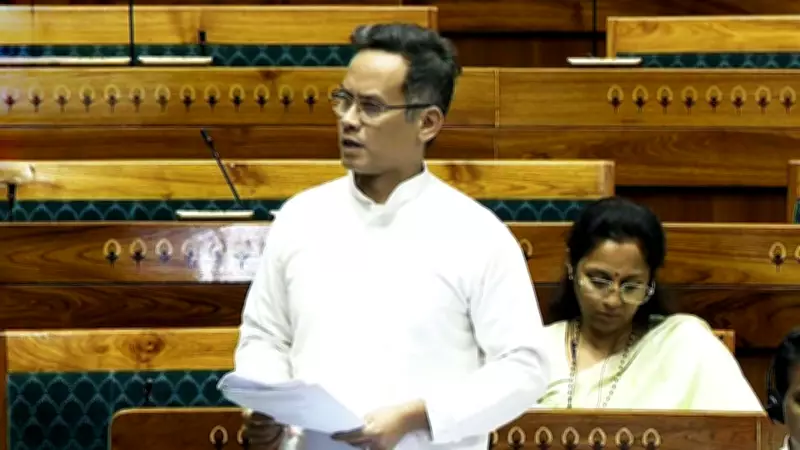
Congress MP Gaurav Gogoi Challenges Government's 850-Seat Lok Sabha Expansion Plan
In a dramatic parliamentary intervention, Congress MP Gaurav Gogoi has launched a scathing attack on the central government's controversial proposal to increase the number of Lok Sabha seats. The fiery debate centers on whether this expansion is genuine reform or political maneuvering, particularly concerning the long-pending women's reservation issue.
Questioning the 850-Seat Figure and Political Motivations
Gaurav Gogoi directly challenged the government's methodology, demanding to know how the specific figure of 850 Lok Sabha seats was determined. He raised serious concerns about whether this number has political origins rather than being based on demographic or constitutional principles. The Congress parliamentarian accused the administration of attempting to "bulldoze" the process by deliberately linking women's reservation with seat expansion.
"This appears to be a calculated move to delay benefits for women while simultaneously reshaping electoral equations to favor certain political interests," Gogoi asserted during the parliamentary session. His comments have ignited a broader national conversation about delimitation processes and their potential impact on democratic representation.

Government's Defense and Structured Reform Claims
In response to these allegations, Union Minister Arjun Meghwal presented the government's perspective, stating that the proposal is part of a structured reform initiative. According to Meghwal, the House strength could potentially rise to approximately 815 seats, with provisions ensuring one-third reservation for women parliamentarians.
The government maintains that this expansion is necessary to better represent India's growing population and ensure more equitable political participation. Three major bills have been introduced to facilitate this process, triggering what has become a significant political clash over representation, timing, and legislative intent.
Broader Political Implications and Parliamentary Standoff
The controversy has escalated into a major parliamentary confrontation, with opposition parties questioning the timing and transparency of the proposals. Critics argue that the government is using seat expansion as a pretext to postpone implementing women's reservation, which has been a longstanding demand across political spectrums.
As Parliament continues to debate these proposals, the spotlight remains firmly fixed on whether this represents genuine democratic reform or strategic political recalibration. The outcome could significantly alter India's electoral landscape and determine when women will finally achieve their promised one-third representation in the Lok Sabha.
The debate has exposed deep divisions between the ruling party and opposition regarding how best to implement women's reservation while addressing the complex issue of delimitation. With both sides digging in their positions, the parliamentary proceedings have become a crucial battleground for India's democratic future.