Cultural Fog Cannot Obscure Political Crime: Godse Deserves No Benefit of Doubt
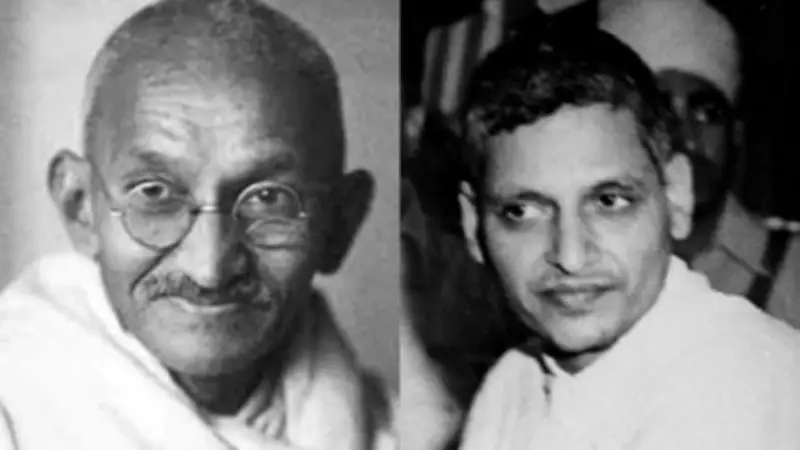
Culture should never serve as a get-out-of-jail-free card for political guilt, especially concerning the assassination of Mahatma Gandhi. Yet, BJP leader Ram Madhav's recent column repeats a decades-old pattern of the Hindu Right: draping Nathuram Godse's crime in a cultural fog that dangerously obscures political accountability.
Historical Revisionism Through Cultural Ambiguity
In his analysis, Madhav attempts to justify murder through cultural and historical contextualization, which stands as an insult to Indian civilization. While examining the reasons behind Gandhi's assassination, the senior BJP leader appears to excavate the Mahatma's supposed "crimes" to lighten the ideological burden carried by Godse's successors. This approach transforms a clear political act into what Madhav frames as a cosmic or spiritual riddle.
Scrutinizing the politics that produced Godse does not constitute an attack on Hindu faith or culture. Rather, it represents an essential act of democratic hygiene necessary for any mature republic. Madhav's narrative throws Gandhi, Jawaharlal Nehru, Sardar Patel, the Congress party, the British, and even M.A. Jinnah into a pot of "circumstances" surrounding Partition, ultimately presenting Godse as someone who merely took things "too far" in response to historical tragedy.

The Dangerous Dissolution of Individual Responsibility
Dissolving Godse's crime into "collective circumstances" serves primarily to protect the ideological network behind the assassination. Historical records show that India thoroughly investigated, tried, and convicted Godse, banned the RSS temporarily, and identified groups that had systematically painted Gandhi as "anti-Hindu." These facts become obscured when cultural reverence replaces political accountability.
Madhav attempts to comfort readers by suggesting India continues thanks to "Gandhi's eternal presence," but these words remain irrelevant to the central question: Were Godse's reasons justified? When Gandhi becomes merely a martyr comparable to Buddha and Jesus, as Madhav suggests, his assassination ceases to be recognized as a political act committed by Hindu nationalists.
Textbook Revisions and Narrative Construction
This cultural framing aligns with recent textbook changes that delete Godse's description as a "Hindu extremist" – clear acts of historical erasure. Columns like Madhav's function as the narrative arm of this same revisionist project. The exhausted reader is subtly nudged toward a "balanced" view where Gandhi appears as a tragic figure, Partition seems like mere fate, and Godse emerges as perhaps misguided but not entirely irrational.
A trained ideologue of the Hindu Right who pumped bullets into Gandhi becomes buried under sentimentalism about circumstances and dilemmas. As sociologist Maurice Halbwachs demonstrated, collective memory is actively constructed to sustain current identities and power structures. The story a nation tells about its martyrs and traitors represents a deliberate political choice.
Democratic Adulthood Requires Honest Accounting
Democratic maturity demands holding two commitments simultaneously: pride in cultural inheritance and insistence on honest political accounting. Our culture faces no trial when we assert that Godse's ideology, associates, and their ecosystem must bear responsibility for their actions. If the BJP genuinely believes in Gandhi's "eternal presence," it must begin by accepting the full truth about those who viewed him as the principal obstacle to a Hindu rashtra.
A confident civilization requires no flirtation with the logic of its greatest assassin to affirm its pride. Gandhi's India will not be protected by ritual tributes alone. True protection emerges when every attempt to sanitize Godse's politics is called out as an assault on truth and the Republic's moral memory. Culture should indeed hold up a mirror, and in that reflection, Gandhi's non-violence, pluralism, and moral courage represent what's best about India. But these same symbols transform into masks when used to cover actions betraying those very values.

The writer, Pawan Khera, serves as chairman of the media and publicity department for the All India Congress Committee. This perspective challenges attempts to rewrite historical narratives surrounding one of independent India's most consequential political assassinations.