Flash Flood Hits Lahaul-Spiti After Glacier Melt
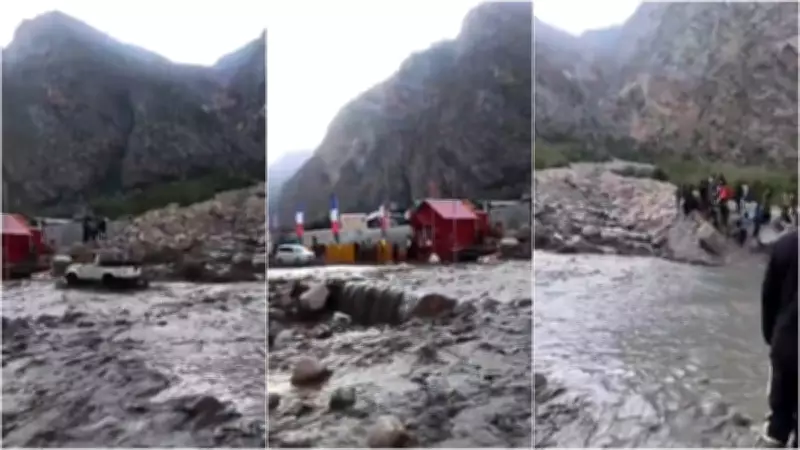
A sudden flash flood triggered by glacial melt in Himachal Pradesh's Lahaul-Spiti district on June 30, 2026, left approximately 50 tourist vehicles stranded as a key road was washed away. The incident occurred near the popular tourist destination of Sissu, around 30 kilometers from Keylong, the district headquarters. Officials confirmed that no casualties or injuries have been reported so far.
Details of the Incident
The flash flood swept through the region in the afternoon, carrying debris and boulders that severely damaged a stretch of the road connecting Sissu to Keylong. This road is a vital artery for tourists heading to the high-altitude passes of Kunzum La and Baralacha La. Sub-Divisional Magistrate (SDM) of Keylong, Rohit Rathour, stated that the flood was caused by the sudden melting of a glacier in the upper reaches, exacerbated by unseasonably high temperatures in the region.
Around 50 vehicles, including cars, SUVs, and some buses, were stranded on either side of the breached road. Many of the tourists were from Punjab, Haryana, and Delhi, visiting the scenic Spiti Valley. Local authorities and the Border Roads Organisation (BRO) were immediately alerted, and efforts to clear the debris and restore the road began within hours.

Rescue and Relief Operations
Teams from the National Disaster Response Force (NDRF) and State Disaster Response Force (SDRF) were deployed to the site. They assisted in evacuating tourists to safer locations, including temporary shelters set up in Sissu and Keylong. The district administration arranged for food, water, and medical aid for those stranded. According to SDM Rathour, “All stranded tourists are safe. We are providing them with essential supplies and will move them to Keylong once the road is passable.”
By evening, a temporary diversion was created using bulldozers, allowing some vehicles to cross cautiously. However, heavy machinery was required to fully clear the large boulders, and the road was expected to be fully operational within 24 hours.
Impact on Tourism and Infrastructure
The flash flood has temporarily disrupted tourism in the region, which is in peak season during June. Lahaul-Spiti attracts thousands of tourists each year for its unique landscapes and monasteries. The incident also highlighted the vulnerability of Himalayan infrastructure to climate change-induced glacial lake outburst floods (GLOFs) and rapid glacial melt. In recent years, similar events have occurred in other parts of Himachal Pradesh and Uttarakhand, prompting calls for better monitoring and early warning systems.
Local environmentalists noted that the rising temperatures in the region, which have been 2-3 degrees Celsius above normal in June 2026, are accelerating glacial melt. Dr. Anil Sharma, a glaciologist at the Himachal Pradesh University, said, “The frequency of such flash floods is increasing due to global warming. We need to install real-time monitoring stations on vulnerable glaciers to provide advance warnings.”
Government Response and Future Measures
Himachal Pradesh Chief Minister Sukhvinder Singh Sukhu took stock of the situation and directed the district administration to ensure swift relief. He also announced compensation of Rs 10,000 each for the stranded tourists for their inconvenience. The state government is considering a proposal to deploy drones for regular surveillance of glacial lakes and to develop a comprehensive disaster management plan for high-altitude areas.
The BRO has been tasked with strengthening the road network in the region, including constructing more robust culverts and bridges that can withstand flash floods. Meanwhile, the Indian Meteorological Department (IMD) has issued an advisory for tourists to check weather conditions before traveling to Lahaul-Spiti over the next few days.