

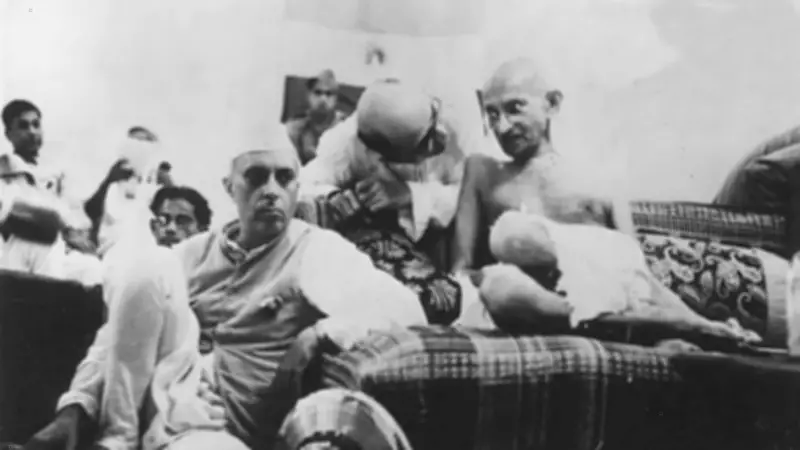
Ram Madhav's Perspective on Gandhi and Nehru's Roles in India's Partition
In a recent column, Ram Madhav, president of the India Foundation and associated with the BJP, presents a critical analysis of the historical dynamics between Mahatma Gandhi and Jawaharlal Nehru during the tumultuous period leading to India's Partition in 1947. He responds to a Congress spokesperson's rejoinder, clarifying that while he condemns Nathuram Godse's assassination of Gandhi as wrong and based on erroneous reasons, his focus is on exposing what he sees as Nehru's greater responsibility for Partition compared to Gandhi.
Gandhi's Unwavering Stance Against Partition
It is an undeniable historical fact that Mahatma Gandhi made persistent efforts until the very end to prevent the division of India. His commitment to national unity was a cornerstone of his political philosophy, driven by a deep-seated desire to keep the country intact amidst rising communal tensions. Gandhi's opposition to Partition was rooted in his vision of a harmonious, undivided nation, and he actively worked to rally support against it, even as political pressures mounted.
Nehru's Alleged Obsession with Political Power
In contrast, Ram Madhav argues that Jawaharlal Nehru's primary focus during those critical months was on securing political power, regardless of the consequences. According to Madhav, Nehru's actions were motivated by a strategic ambition to ascend to leadership, even if it meant accepting Partition. This perspective is supported by historical accounts, including letters and exchanges that reveal tensions between Nehru and other leaders.

For instance, Subhas Chandra Bose, in a frank letter dated March 1939, criticized Nehru for political misconduct, policy ambiguities, and hypocrisy. In his reply, Nehru admitted to certain failings but justified his actions as necessary to maintain alignment with Gandhi, suggesting that his loyalty was more about political patronage than ideological conviction. Gandhi himself acknowledged Nehru as his successor in 1942, but later realized that Nehru did not share his thought process, as evidenced by a 1945 exchange where Nehru dismissed Gandhi's ideas in Hind Swaraj as "unreal."
Key Events Highlighting the Divide
Several pivotal events underscore the divergence between Gandhi and Nehru. In early 1946, elections for the Congress presidency were proposed, with the winner likely to become prime minister of the interim government. Twelve out of fifteen Provincial Congress Committees proposed Sardar Patel for the post, while none proposed Nehru. Despite this, Nehru insisted on contesting, forcing J.B. Kripalani and Patel to withdraw, a move that Madhav interprets as a power grab.
Another significant moment was the Cabinet Mission Plan of 1946, which aimed to prevent Partition by grouping provinces and limiting central government powers. Gandhi opposed it due to its communal divisions, but the Congress Working Committee accepted it. However, Nehru unilaterally called a press conference, expressing dissatisfaction with a "weak Centre" and suggesting that grouping might not occur, which gave M.A. Jinnah an excuse to reject the plan. This, according to Madhav, paved the way for the June 3 Partition plan, which Nehru and others hastily supported, leading to massive unrest within Congress that required Gandhi's intervention to pacify cadres.
Conclusion: A Clash of Motivations
Ram Madhav concludes that while Gandhi was driven by a profound desire to maintain India's unity, Nehru was propelled by a quest for political power, even at the cost of Partition. This analysis challenges traditional narratives and invites a reevaluation of the roles played by these iconic figures in one of modern India's most defining moments. The column emphasizes the complexity of historical leadership and the enduring impact of personal ambitions on national outcomes.






