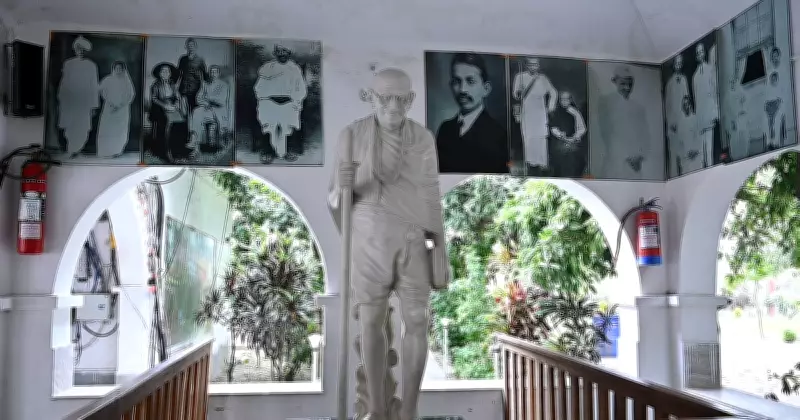
Rediscovering Gandhi's Champaran Ashram: Where the Mahatma's Mass Leadership Journey Began
The transformation of Mohandas Karamchand Gandhi into Mahatma Gandhi, India's revered mass leader, finds its roots in a serene village in Bihar's Champaran district. It was here, amidst the struggles of oppressed indigo farmers, that Gandhi first embraced his role as a champion of the people, marking a pivotal chapter in India's freedom struggle.
The Historic Setting of Gandhi's Awakening
In the early 20th century, Champaran became the crucible where Gandhi's philosophy of non-violent resistance and grassroots activism took shape. Responding to the plight of local farmers forced into exploitative indigo cultivation by British planters, Gandhi arrived in 1917. His intervention not only addressed immediate grievances but also ignited a nationwide movement, establishing his reputation as a leader who could mobilize the masses.
Preserved Artifacts and Exhibits at the Ashram
The ashram, now a site of historical significance, houses several artifacts from Gandhi and his wife Kasturba Gandhi's stay. Key attractions include:

- A well used by the Gandhis during their residence.
- A school established to promote education among local communities.
- A bronze bell that once marked daily routines at the ashram.
- A wheat grinder, symbolizing the simple, self-sufficient lifestyle Gandhi advocated.
These items offer a tangible connection to the Gandhis' daily life and their commitment to rural upliftment.
Visual Narratives of Indigo Cultivation and Peasant Uprising
The ashram also features photographs and illustrations that vividly depict the harsh realities of indigo cultivation and the subsequent peasant uprising. These displays serve as educational tools, highlighting:
- The economic exploitation faced by farmers under colonial rule.
- The resilience and unity of the peasant community in Champaran.
- Gandhi's strategic role in organizing peaceful protests and negotiations.
Through these visual narratives, visitors gain insights into the socio-economic conditions that fueled one of India's earliest successful satyagrahas.
The Legacy of Champaran in Gandhi's Evolution
Champaran's significance extends beyond a mere historical event; it represents the foundational moment when Gandhi transitioned from a lawyer to a mass leader. His success here demonstrated the power of non-violent activism and community engagement, principles that would later define India's independence movement. The ashram stands as a testament to this legacy, reminding us of the humble beginnings from which great movements emerge.
As efforts continue to preserve and promote this forgotten ashram, it remains a beacon for those interested in India's freedom struggle and Gandhi's enduring impact. By visiting or learning about Champaran, one can appreciate the grassroots origins of a leadership that would inspire millions worldwide.