Tulsi Gabbard Breaks Silence on Iran Conflict, Supports Trump's Decision
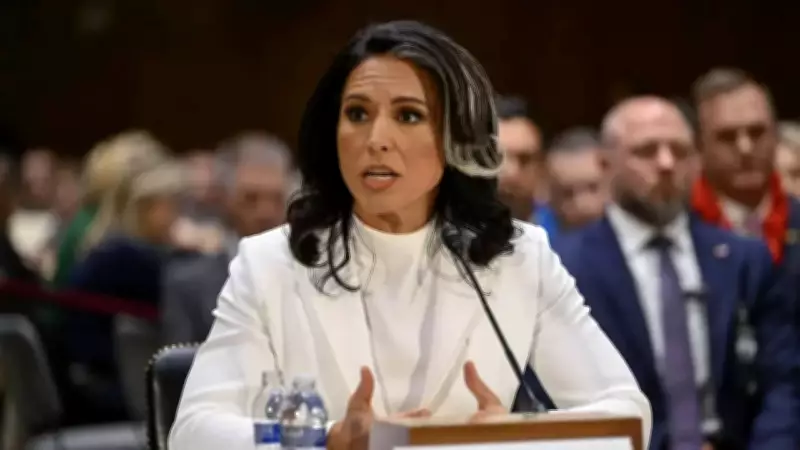
Director of National Intelligence Tulsi Gabbard broke her silence on Tuesday, issuing her first statement regarding the United States' military engagement with Iran. This move came shortly after her top aide, Joe Kent, who served as the director of the National Counterterrorism Center, resigned from his position. Kent stepped down due to his disagreement with President Donald Trump's approach to the war on Iran, citing that Iran did not pose an imminent threat to the US.
Gabbard's Statement Backs Presidential Authority
In her statement, Gabbard emphasized the role of the President as Commander in Chief, stating, "Donald Trump was overwhelmingly elected by the American people to be our President and Commander in Chief. As our Commander in Chief, he is responsible for determining what is and is not an imminent threat, and whether or not to take action he deems necessary to protect the safety and security of our troops, the American people and our country." She highlighted that the Office of the Director of National Intelligence is tasked with coordinating intelligence to inform such decisions.
Gabbard further noted, "After carefully reviewing all the information before him, President Trump concluded that the terrorist Islamist regime in Iran posed an imminent threat and he took action based on that conclusion." This statement directly countered Kent's argument, as he had claimed in his resignation letter that the war was initiated under pressure from Israel and its lobbyists in the US, rather than due to an immediate danger from Iran.

Contrast with Joe Kent's Resignation
Joe Kent's resignation letter explicitly stated that Iran posed no imminent threat to the United States. He argued, "we started this war due to pressure from Israel and its powerful American lobby." In contrast, Gabbard's statement did not mention Kent by name but implicitly addressed his concerns by affirming Trump's authority to assess threats. She asserted that her department's responsibility is to provide the president with the best available information, which Trump used to make his decision.
Speculations had been rife that Gabbard, known for her anti-war stance, might also exit her position, especially since she had remained silent on the Iran war initially. However, her Tuesday statement clarified her support for the administration's actions, aligning with Trump's perspective on the conflict.
Broader Context of the Iran-Israel Conflict
The statement comes amid ongoing tensions in the Middle East, with recent events such as Iran labeling Israeli bombings of fuel depots as 'ecocide' and Trump warning NATO allies about the fallout from the war. These developments underscore the complex geopolitical dynamics at play, involving multiple nations and intelligence assessments.
Gabbard's role as Director of National Intelligence places her at the center of these discussions, tasked with integrating intelligence to guide national security decisions. Her statement reinforces the administration's narrative while distancing from Kent's dissenting views, highlighting a unified front in the face of international scrutiny.