Rafale Deal: A Costly Necessity Due to Indigenous Program Delays
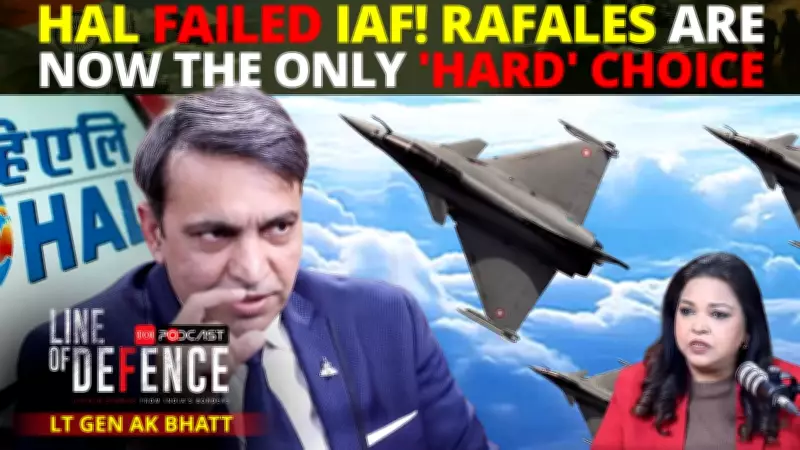
In a stark revelation, former Indian Air Force pilot Group Captain Ajay Ahlawat has highlighted how delays in indigenous defense programs have compelled India to opt for the expensive Rafale fighter jets. Speaking on TOI's Line of Defence podcast, Ahlawat emphasized that while the Rafale is costly, the price of military vulnerability is far greater.
Looming Fleet Crisis and the Rafale Solution
The Indian Air Force is grappling with a severe fleet shortage as key aircraft like the Jaguars, MiG-29s, and Mirage-2000s approach retirement. This impending crunch has created an urgent need for modern combat aircraft to maintain air superiority and national security.
Gp Capt Ahlawat argued that in this critical scenario, the Rafale emerges as an unavoidable, albeit expensive, option. He pointed out that indigenous alternatives have failed to materialize on time, forcing the government to make tough procurement decisions.

HAL's Failure and the $40 Billion Import Bill
The core of the issue lies with Hindustan Aeronautics Limited (HAL) and its inability to deliver the Light Combat Aircraft (LCA) MK2. According to Ahlawat, the LCA MK2 possesses similar capabilities to the Rafale F2 or F3 variants on paper, but has yet to take flight despite years of development.
"This delay has resulted in India spending approximately $40 billion on importing Rafale aircraft instead of building them domestically," Ahlawat revealed during the podcast discussion. This massive expenditure represents a significant drain on national resources that could have been invested in indigenous defense manufacturing.
Comparative Analysis: Rafale vs. Indigenous Options
The former IAF pilot provided a detailed comparison between the available options:
- Rafale Fighter Jets: Proven combat capability, immediate availability, but comes with high acquisition and maintenance costs
- LCA MK2: Theoretical parity with Rafale capabilities, potential for domestic production and technology development, but plagued by persistent delays
- Aging Fleet: Jaguars, MiG-29s and Mirage-2000s nearing obsolescence, creating operational gaps that must be filled urgently
Strategic Implications for National Security
Ahlawat's analysis underscores a critical dilemma facing India's defense establishment. While promoting indigenous defense manufacturing remains a strategic priority, operational requirements cannot be ignored. The former pilot stressed that national security cannot be compromised while waiting for domestic programs to mature.
"The Rafale may be expensive, but defeat in aerial combat would be costlier," Ahlawat stated, encapsulating the difficult choice facing defense planners. This perspective highlights the complex balance between strategic autonomy through indigenous development and immediate operational needs.
Future Outlook and Recommendations
The podcast discussion concluded with recommendations for addressing this ongoing challenge:
- Accelerate development and testing of the LCA MK2 program to reduce dependency on imports
- Implement stricter timelines and accountability measures for defense public sector undertakings
- Develop a balanced procurement strategy that combines immediate needs with long-term indigenous capability building
- Increase investment in research and development to bridge technological gaps in domestic defense manufacturing
The revelations from the former IAF pilot provide crucial insights into the difficult decisions facing India's defense establishment as it navigates between immediate operational requirements and long-term strategic goals of self-reliance in defense production.