Education Minister Calls for 'Mahakal Standard Time' to Supersede Greenwich Mean Time
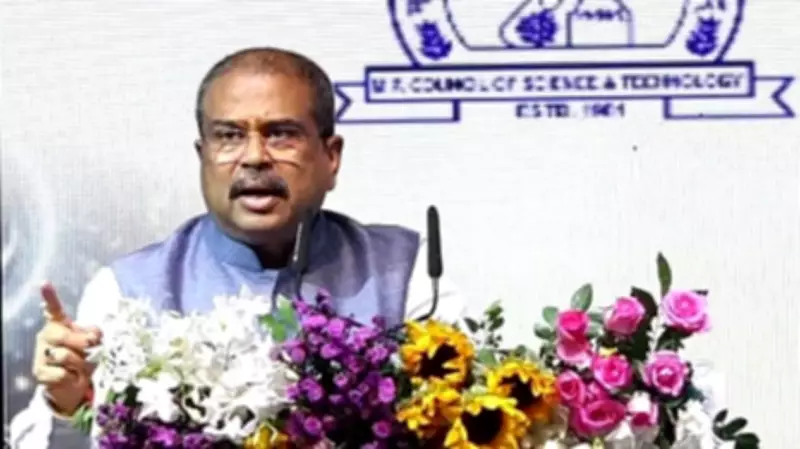
In a bold move that blends cultural heritage with modern governance, Union Education Minister Dharmendra Pradhan has publicly advocated for the establishment of 'Mahakal Standard Time' as a replacement for the globally recognized Greenwich Mean Time (GMT). This proposal, made during a recent public address, draws upon India's ancient astronomical traditions and the historical significance of the city of Ujjain in Madhya Pradesh.
Historical and Cultural Rationale Behind the Proposal
Minister Pradhan emphasized that the concept of timekeeping is deeply rooted in Indian civilization, with Ujjain historically serving as a prime meridian for Hindu astronomers. The city, home to the revered Mahakaleshwar Jyotirlinga temple, was a center for astronomical studies and calculations in ancient times. The minister argued that adopting a time standard based on this meridian would honor India's rich scientific legacy and assert its cultural identity on the global stage.
He pointed out that while Indian Standard Time (IST) is currently set at UTC+5:30, aligning it with the Ujjain meridian could redefine global time references. This shift, according to Pradhan, would not only celebrate India's contributions to mathematics and astronomy but also challenge the colonial-era dominance of GMT, which is based on the Royal Observatory in Greenwich, London.

Implications for Global Time Standards and National Identity
The proposal for Mahakal Standard Time raises significant questions about the practicality and international acceptance of such a change. GMT has been the world's time reference since 1884, facilitating coordination in fields like aviation, finance, and telecommunications. Replacing it would require extensive diplomatic negotiations and technical adjustments across nations.
However, Pradhan's demand is seen by many as a symbolic gesture aimed at promoting national pride and revisiting historical narratives. It underscores a growing trend in India to reclaim and highlight indigenous knowledge systems in contemporary discourse. The education minister's role in this initiative suggests a potential link to educational curricula, possibly integrating lessons on India's astronomical heritage into schools and universities.
Reactions and Future Prospects
Initial reactions to the proposal have been mixed. Supporters laud it as a step toward decolonizing time standards and recognizing non-Western contributions to science. Critics, however, question the feasibility and necessity of such a change, citing the logistical complexities and potential disruptions to global systems.
As discussions unfold, the focus will likely be on how this idea aligns with India's broader goals in education and cultural diplomacy. Whether Mahakal Standard Time remains a rhetorical point or evolves into a formal policy initiative remains to be seen, but it has undoubtedly sparked a conversation about time, history, and identity in the modern world.