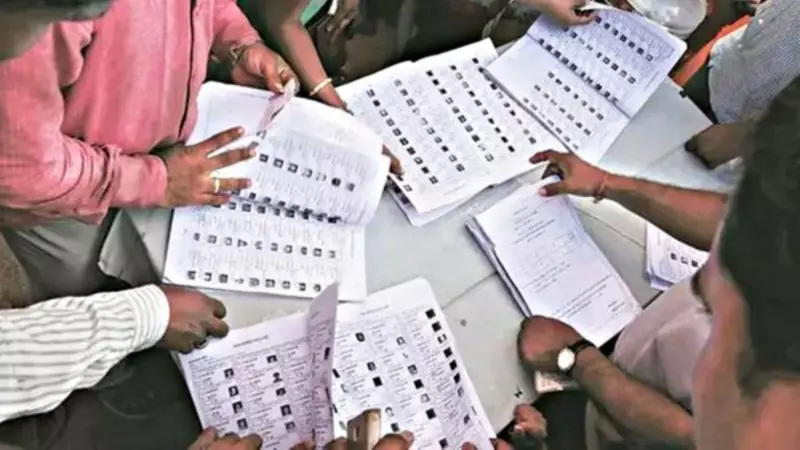
ECI Releases Massive Voter List with 1.5 Crore Names for Verification Process
The Election Commission of India (ECI) has taken a significant step in electoral roll purification by publishing an extensive list containing 1.50 crore voter names that require verification through Special Intensive Revision (SIR) hearings. This comprehensive list, made available on Saturday, represents one of the largest electoral verification exercises in recent history.
Breakdown of Voter Categories in Published List
According to official sources, the published list contains two primary categories of voters requiring attention. Approximately 30 lakh names have been classified as "unmapped voters", indicating they lack connection with the previous SIR conducted back in 2002. Meanwhile, a substantial 1.20 crore names have been flagged for having "logical discrepancies" in their registration details.
Distribution Mechanism for Electoral Officers
The commission has specifically prepared this list for Electoral Registration Officers (EROs) and District Election Officers (DEOs) across the country. These officials have been instructed to:

- Take printouts of the comprehensive voter list
- Display the lists at multiple designated locations
- Follow Supreme Court guidelines for public accessibility
A senior ECI official clarified the timeline, stating, "While we aimed to publish the list by Saturday night, it was not mandatory to complete this by January 24. The Supreme Court did not govern any such specific deadline for this publication."
Supreme Court Directives for Transparent Verification
The publication follows significant directions from the Supreme Court issued on January 19, which mandated the Election Commission to ensure:
- Transparent verification processes for individuals in the 'logical discrepancies' category
- Minimization of stress and inconvenience during verification
- Public display of names at gram panchayat bhavans, block offices, and ward offices in West Bengal
The court noted that approximately 1.25 crore notices have already been dispatched to individuals citing various discrepancies including:
- Mismatch in parents' names on records
- Unusually low age-gap between voters and their parents
- Number of progeny exceeding six children
Accessible Response Mechanism for Voters
To address concerns about accessibility, the Supreme Court established specific provisions:
Individuals receiving notices from the EC can submit documents and objections through authorized agents, specifically Booth Level Agents (BLAs). These agents must be formally appointed through letters containing signatures or thumb impressions for authentication purposes.
Recognizing potential travel hardships, the court directed that submission offices be established within Panchayat Bhavans or Block offices, eliminating the need for voters to travel long distances. If submitted documents prove unsatisfactory, election officers must provide hearing opportunities where authorized agents can represent the concerned individuals.
Centralized Publication to Avoid Confusion
ECI sources revealed that some districts had already begun publishing local hearing lists following the Supreme Court verdict. However, the Chief Electoral Officer (CEO) issued directives to DEOs prohibiting independent publications, emphasizing that "no one can publish the list because it will be published by ECI centrally." Districts that had already released local lists were instructed to withdraw them to prevent public confusion and maintain uniformity in the verification process.
This massive electoral verification exercise represents a crucial step toward ensuring the integrity of India's voter database while balancing transparency with voter convenience through the mechanisms established by judicial oversight.