

DMK Minister Slams AIADMK for Rehashing Government's Work as Poll Promises
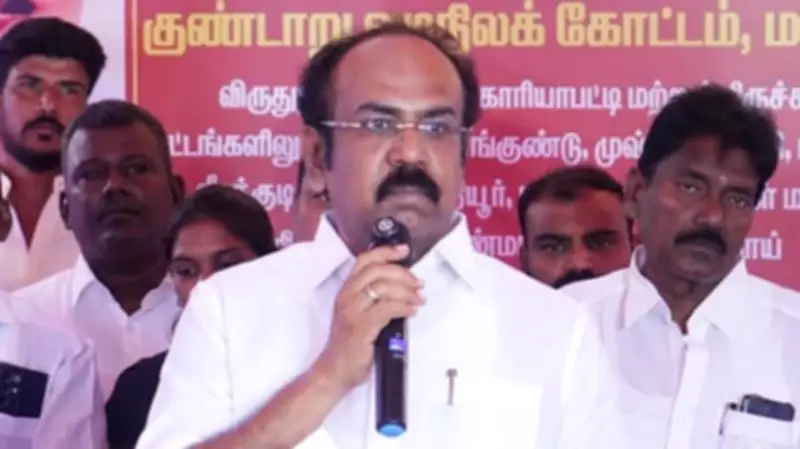
In a sharp political critique, Tamil Nadu Minister Thangam Thennarasu has accused the opposition AIADMK of merely repackaging the ruling DMK government's already implemented schemes as their own election promises. The minister asserted that this tactic has drawn criticism not only from DMK supporters but also from neutral observers and those outside the party fold.
Accusations of Political Plagiarism
Minister Thennarasu highlighted that the AIADMK's recent announcements closely mirror developmental projects and welfare initiatives that the DMK administration has already executed across Tamil Nadu. He emphasized that while the AIADMK can only make promises during election seasons, it is the DMK that has a proven track record of turning plans into reality for the benefit of the state's citizens.
The minister pointed out that even individuals and groups with no affiliation to the DMK have begun questioning the AIADMK's strategy, seeing it as an attempt to claim credit for work done by the current government. This, he argued, undermines the opposition's credibility and exposes a lack of original policy ideas.

Context of Tamil Nadu's Political Landscape
This exchange occurs amidst ongoing political tensions in Tamil Nadu, where the DMK and AIADMK are key rivals. The DMK, led by Chief Minister M.K. Stalin, has been in power since 2021, implementing various schemes focused on social welfare, infrastructure, and economic development. In contrast, the AIADMK, under former Chief Minister Edappadi K. Palaniswami, is positioning itself as a strong opposition ahead of future elections.
Thennarasu's comments reflect a broader narrative where the ruling party seeks to contrast its governance achievements with what it portrays as the opposition's hollow rhetoric. By alleging that the AIADMK is copying implemented policies, the DMK aims to bolster its image as an effective administrator while casting doubt on the opposition's capability to innovate.
Implications for Voter Perception
The minister's statements are likely intended to influence public opinion by:
- Reinforcing the DMK's reputation for actionable governance.
- Questioning the AIADMK's authenticity and policy depth.
- Appealing to undecided voters by highlighting tangible results over mere promises.
As political dynamics evolve, such accusations could shape electoral debates, with both parties vying to demonstrate their commitment to Tamil Nadu's progress. The DMK's strategy of showcasing implementation over announcement may resonate in a state where developmental outcomes often sway voter sentiment.






