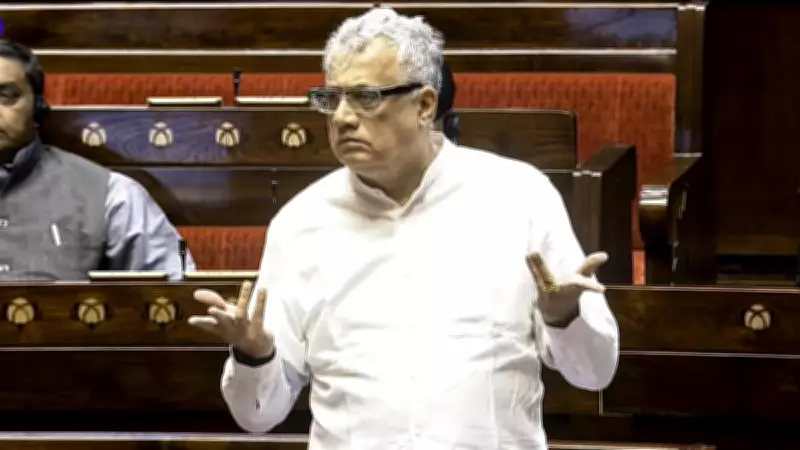
Derek O'Brien Brands PM Modi a 'Teleprompter Tycoon' Over Parliament Absence
In a sharp critique, Trinamool Congress MP Derek O'Brien has labeled Prime Minister Narendra Modi a "teleprompter tycoon," accusing him of evading direct engagement in Parliament. O'Brien's remarks come after the Lok Sabha passed the Motion of Thanks during the recently-concluded Budget session without the prime minister's customary reply, a departure from standard parliamentary procedure.
Unprecedented Move in Lok Sabha Sparks Controversy
The Lok Sabha's decision to pass the Motion of Thanks without the prime minister's response marks an unprecedented development in India's parliamentary history. This occurred amidst relentless sloganeering by Opposition members, who disrupted proceedings to protest various issues. Traditionally, the prime minister addresses the House during this session, offering insights and rebuttals to debates on the President's address.
O'Brien criticized this absence, stating that it reflects a pattern of avoidance by PM Modi. He argued that while the prime minister frequently appears in media interviews and public speeches, his reluctance to speak in Parliament undermines democratic accountability. "These interviews are just hollow words," O'Brien asserted, emphasizing the need for direct parliamentary dialogue.

Opposition Protests and Parliamentary Dynamics
The Budget session, which concluded recently, was marred by continuous protests from Opposition parties. Members raised slogans and demanded discussions on key topics, including economic policies and governance issues. This environment of disruption contributed to the unusual circumstance where the Motion of Thanks was passed without the prime minister's customary reply.
Political analysts note that such incidents highlight growing tensions between the ruling party and the Opposition. The absence of a prime ministerial response has sparked debates on parliamentary norms and the role of executive accountability in India's democracy.
Broader Implications for Indian Politics
This event raises questions about communication strategies in Indian politics. O'Brien's comments underscore a perception that PM Modi relies heavily on scripted appearances, such as those using teleprompters, rather than impromptu parliamentary exchanges. Critics argue that this limits transparency and direct engagement with elected representatives.
In response, supporters of the government point to the prime minister's busy schedule and his efforts to connect with the public through other forums. They argue that parliamentary disruptions by the Opposition made it challenging to conduct normal proceedings, justifying the altered protocol.
As the political landscape evolves, this incident may influence future parliamentary sessions and the dynamics between the government and Opposition. It underscores the ongoing struggle for effective governance and dialogue in India's vibrant democracy.