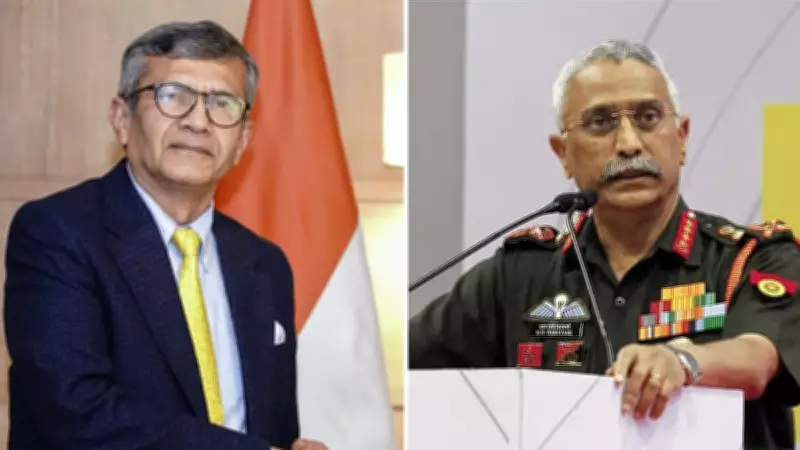
Defence Secretary Emphasizes Existing Laws Amid Naravane Memoir Row
In a significant statement addressing the ongoing controversy surrounding former Army Chief General M M Naravane's unpublished memoir, Defence Secretary Rajesh Kumar Singh has asserted that there is no need for new guidelines. He clarified that existing rules and laws, including the stringent Official Secrets Act (OSA), are already in place to govern such matters effectively.
Focus on Enforcement, Not New Rules
Singh highlighted that the core issue at hand is not the absence of regulatory frameworks but rather whether any of the established rules have been circumvented. "The laws are already there; we don't require additional guidelines," he stated, underscoring the government's stance on relying on current legal provisions. This remark comes amid heightened scrutiny over the handling of sensitive information in memoirs by former military officials.
The Defence Secretary's comments aim to reassure the public and stakeholders that the existing legal infrastructure is robust enough to address potential breaches. He pointed out that the Official Secrets Act, along with other relevant regulations, provides comprehensive coverage for matters involving national security and official disclosures.
Context of the Controversy
The row erupted following reports about General Naravane's unpublished memoir, which has sparked debates over transparency, accountability, and the boundaries of sharing insights from high-ranking positions. Singh's intervention seeks to steer the conversation towards adherence to existing protocols rather than initiating new bureaucratic measures.
Key points from his statement include:
- Existing laws, such as the OSA, are sufficient to manage disclosures.
- The priority is to ensure that no rules have been bypassed in this instance.
- There is no immediate plan to introduce new guidelines for such cases.
This development underscores the government's approach to balancing national security concerns with the rights of individuals to share their experiences, all within the confines of established legal frameworks. As the situation unfolds, further clarity is expected on how existing laws will be applied to safeguard sensitive information while respecting procedural integrity.