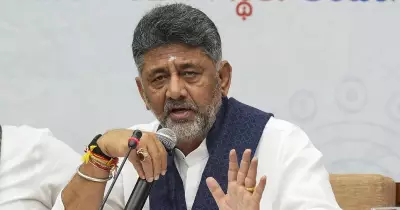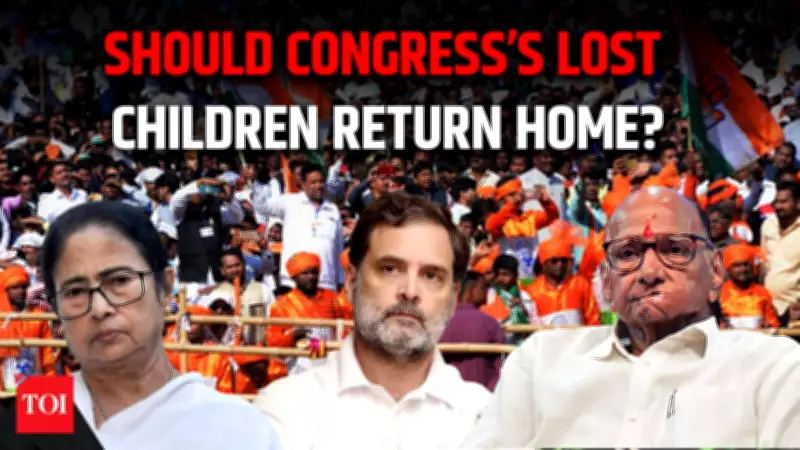
Should leaders like Mamata Banerjee and Sharad Pawar consider returning to the Congress fold? While reports of a merger between the Congress and the Trinamool Congress have been firmly denied, the speculation has sparked a larger political debate. As regional parties face growing challenges and the BJP continues to expand its footprint across India, some opposition leaders believe the time has come for Congress's former rebels to reunite with the parent party.
The Exodus from Congress
Leaders such as Mamata Banerjee, Sharad Pawar, and Jagan Mohan Reddy left the Congress at different times, each citing unique reasons. Mamata Banerjee founded the Trinamool Congress in 1998 after differences with the Congress leadership over alliance strategies in West Bengal. Sharad Pawar was expelled from the Congress in 1999 for questioning Sonia Gandhi's foreign origin as a prime ministerial candidate. Jagan Mohan Reddy quit the Congress in 2011 following his father's death and a feud with the party leadership.
What Has Changed in Indian Politics?
Since their departures, the political landscape has transformed dramatically. The BJP has become the dominant force, winning consecutive national elections and expanding into states where it previously had little presence. Regional parties, once powerful, are now struggling to maintain their relevance and are increasingly aligning with either the BJP or the Congress. The opposition space has fragmented, leading to calls for unity among anti-BJP forces.

Opposition Unity: Merger or Cooperation?
The debate centers on whether opposition unity requires a formal merger of parties or simply stronger cooperation through platforms like the INDIA bloc. Proponents of a merger argue that a unified Congress-led party could provide a stronger alternative to the BJP. Critics, however, point out that regional parties have their own identities and support bases that could be diluted in a merger. They advocate for a coalition approach, where parties retain their autonomy while working together on common issues.
Challenges Facing Regional Parties
Regional parties today face numerous challenges, including financial constraints, leadership crises, and the BJP's organizational strength. Many are struggling to retain their vote banks, especially in states where the BJP has made inroads. This has led some to consider a return to the Congress fold as a survival strategy.
The Road Ahead
As the 2029 general elections approach, the question of opposition unity will become increasingly critical. Whether through a merger or a coalition, the opposition must find a way to present a united front against the BJP. The decisions of leaders like Mamata Banerjee and Sharad Pawar will play a key role in shaping the future of Indian politics.