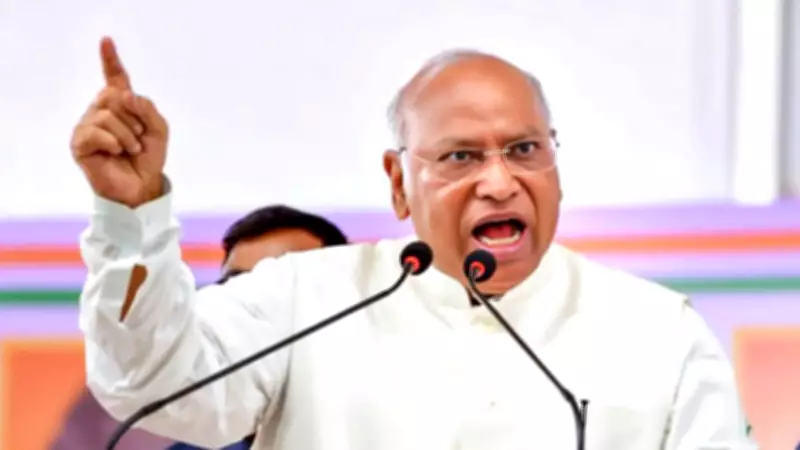
Congress President Accuses Government of Violating Model Code with Women's Reservation Proposal
Congress president Mallikarjun Kharge has made serious allegations against the Narendra Modi-led government, claiming that its proposed amendments to the women's reservation law and expansion of parliamentary seats could constitute a violation of the Model Code of Conduct. Kharge warned that these moves could have "grave consequences" for India's electoral system and democratic processes.
Opposition to Formulate United Strategy Against Government Moves
Addressing a crucial meeting of the Congress Working Committee (CWC) on Friday, Kharge emphasized that the opposition parties would respond collectively to what he described as the government's hasty approach. "Therefore, following this meeting, we will formulate a collective strategy by holding discussions on these issues with our colleagues in the opposition as well. We will move forward unitedly," Kharge stated, according to reports from news agency PTI.
The CWC meeting, attended by prominent leaders including Rahul Gandhi and Priyanka Gandhi Vadra, focused extensively on the government's proposals regarding women's reservation, delimitation exercises, and the broader political landscape ahead of upcoming elections.

Questioning the Timing of Special Parliament Session
Kharge raised significant concerns about the timing of the special Parliament session scheduled from April 16 to 18, suggesting it was strategically planned for political gain rather than genuine legislative deliberation. "The Modi government is convening Parliament's sittings with the sole intention of securing political advantage and is keen to pass the Constitutional Amendment Bill in utmost haste," the Congress president asserted.
He further criticized the government for what he described as ignoring the opposition's request to conduct an all-party meeting after the conclusion of polling in West Bengal. "This constitutes a violation of the Model Code of Conduct ... we harbor no expectation that the Election Commission will even take cognizance of these violations," Kharge added, expressing skepticism about institutional responses to these alleged breaches.
Proposed Changes to Women's Reservation and Lok Sabha Seats
According to information shared during the CWC meeting, the government plans to implement women's reservation starting from the 2029 general elections while simultaneously increasing the number of Lok Sabha seats from the current 543 to 816. Kharge emphasized that such significant changes to India's parliamentary structure require "very deep deliberation" rather than rushed implementation.
"Based on the information we have received so far, the government wants to implement women's reservation starting from the 2029 elections ... it wants to increase the number of seats in the Lok Sabha from 543 to 816," Kharge revealed, highlighting the scale of the proposed changes.
Concerns Over Delimitation and Electoral Impact
The Congress president expressed particular apprehension about the delimitation exercise that would accompany the seat expansion, warning that it could have serious consequences for electoral representation across states. "This delimitation proposal will have serious consequences. Therefore, there is a need for very deep deliberation on delimitation," Kharge stressed, calling for more comprehensive consultation before such fundamental changes to India's electoral architecture.
Rahul Gandhi reinforced the party's position through a Facebook post, stating, "The Congress remains steadfastly committed to ensuring women's empowerment and social justice," while simultaneously questioning the government's approach to implementing these changes.
Government's Legislative Agenda for Special Session
The government is expected to introduce multiple bills during the upcoming special Parliament session aimed at implementing the Women's Reservation Act before the 2029 general elections and increasing Lok Sabha seats, with a substantial portion reserved for women candidates. These proposed legislative changes have sparked intense political debate about their timing, implementation strategy, and potential impact on India's democratic framework.

The opposition's united stance against what they perceive as rushed constitutional amendments sets the stage for significant parliamentary confrontations during the special session, with broader implications for India's political landscape and electoral processes in the coming years.