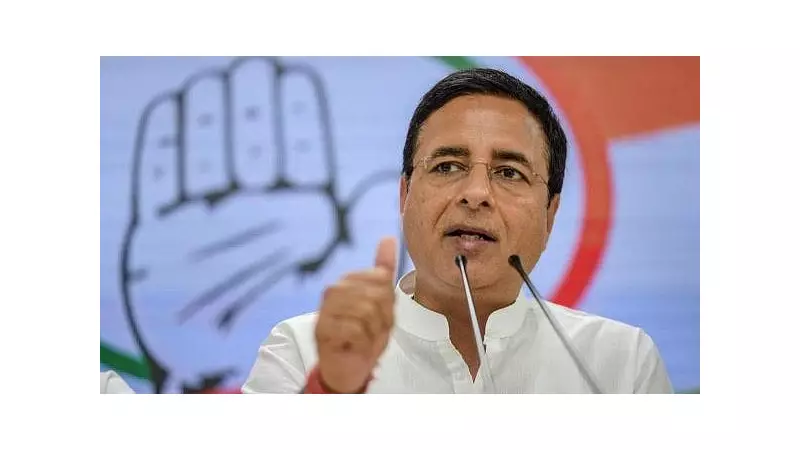
Senior Congress leader and Rajya Sabha member Randeep Singh Surjewala has launched a sharp attack on the Bharatiya Janata Party (BJP), accusing it of distorting a national symbol into a tool for division. In a significant allegation, Surjewala claimed the ruling party has turned the patriotic song 'Vande Mataram' into a 'language of hate' to polarize communities.
The Core Allegation: Polarization in Mewat
Surjewala's comments, made public on 30 December 2025, specifically targeted the BJP's political strategy in the Mewat region. The Congress MP alleged that the party has systematically worked to create a rift between Hindu and Muslim communities in the area. He asserted that the BJP's approach involved using revered national sentiments not to unite, but to deliberately drive a wedge between different religious groups for political gain.
Context and Political Repercussions
The allegation from a prominent Congress figure adds fuel to the ongoing heated political discourse in the country. By invoking 'Vande Mataram', a song deeply embedded in India's independence movement and national identity, the accusation carries substantial emotional and symbolic weight. Surjewala's statement implies that the BJP's actions in Mewat are part of a broader pattern of using cultural and patriotic symbols to foster communal polarization. This charge is likely to intensify the war of words between the Congress and the BJP, especially in the charged atmosphere of Indian politics.

Looking Ahead
As of now, there has been no immediate official response from the BJP to Surjewala's specific allegations regarding Mewat. However, such a direct charge is expected to draw strong reactions from the ruling party's leaders. The incident underscores the increasingly contentious nature of political rhetoric, where symbols of national unity are becoming focal points of bitter dispute. The development in Chandigarh, where Surjewala's remarks gained traction, highlights how local political strategies are being scrutinized on a national stage, with significant implications for social harmony and electoral politics.