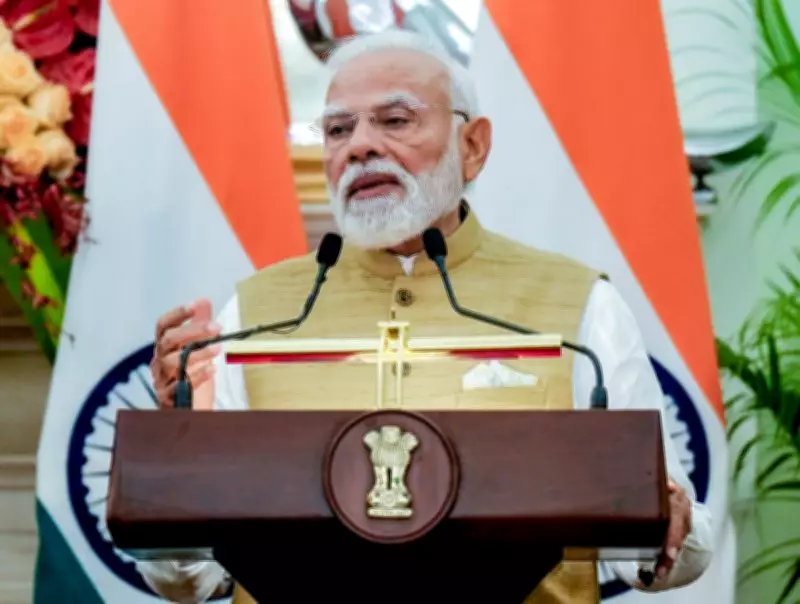
Congress Slams PM Modi Over US-Iran Conflict, Dubs Him 'Self-Styled Vishwaguru'
The Indian National Congress has launched a sharp critique against Prime Minister Narendra Modi regarding his response to the escalating tensions between the United States and Iran. The opposition party has labeled the Prime Minister a 'self-styled Vishwaguru', a term that translates to 'world teacher', and has raised serious questions about the effectiveness and consistency of India's foreign policy under his leadership.
Allegations of Inadequate Diplomatic Posture
Congress leaders have pointedly accused the Modi government of failing to articulate a clear and principled stance on the volatile US-Iran situation. They argue that India, as a significant regional power with strategic interests in the Middle East, should adopt a more proactive and nuanced diplomatic approach. The criticism centers on what the Congress perceives as a reactive and ambiguous foreign policy that may compromise India's national security and economic interests, particularly concerning energy supplies and regional stability.
The 'Vishwaguru' Moniker Under Scrutiny
The use of the term 'self-styled Vishwaguru' by the Congress is a direct challenge to the image often projected by the ruling Bharatiya Janata Party (BJP) of Prime Minister Modi as a global leader. The opposition contends that this portrayal is not matched by substantive achievements in complex international crises like the US-Iran conflict. They emphasize that true global leadership requires decisive action and coherent strategy, not merely rhetorical posturing.

Context of the US-Iran Tensions
The backdrop to this political controversy is the heightened military tensions between the United States and Iran, which have significant implications for international peace and India's foreign relations. India maintains crucial diplomatic and economic ties with both nations, importing substantial oil from Iran and engaging in strategic partnerships with the US. The Congress has highlighted the potential risks to India's energy security and regional influence if the government's policy is perceived as indecisive or misaligned.
Political Repercussions and Public Discourse
This criticism from the Congress adds to the ongoing political discourse in India, where foreign policy is increasingly becoming a focal point of debate between the ruling party and the opposition. The allegations are likely to fuel further discussions in Parliament and public forums about India's role on the world stage. Analysts suggest that such exchanges could influence domestic perceptions of the government's competence in handling international affairs.
In summary, the Congress's rebuke of Prime Minister Modi over the US-Iran war underscores deep-seated concerns about India's foreign policy direction. By branding him a 'self-styled Vishwaguru', the opposition aims to question the authenticity and efficacy of his global leadership claims, urging for a more robust and transparent approach to diplomatic challenges.