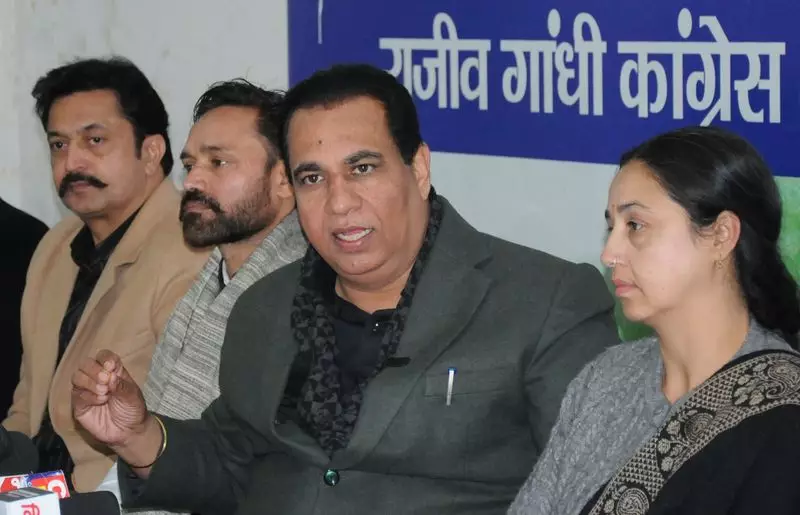
Congress Party Issues Strong Rebuttal to Chandigarh Mayor's Claims Against Manish Tewari
The Indian National Congress has issued a formal and unequivocal denial of the allegations leveled by the Chandigarh Mayor against its Member of Parliament, Manish Tewari. In a statement released today, party officials described the accusations as completely unfounded and driven by political vendetta rather than any factual basis. This development marks a significant escalation in the ongoing political discourse within the Union Territory of Chandigarh, bringing internal party dynamics into the public spotlight.
Details of the Allegations and the Swift Denial
According to sources, the Chandigarh Mayor, whose identity has been widely reported in local media, made several serious claims against Manish Tewari, implicating him in activities that the Congress party asserts are entirely fabricated. While the specific nature of these allegations has not been fully disclosed in public forums, insiders suggest they pertain to matters of governance and administrative interference within the city.
The Congress response was swift and forceful. A senior party spokesperson stated, "These allegations are a desperate attempt to tarnish the reputation of one of our most respected leaders. Manish Tewari has served the people of Chandigarh and the nation with unwavering integrity, and we stand firmly by him." The party has emphasized that there is no evidence to support the Mayor's claims and has called for an end to what it terms "baseless mudslinging."

Political Implications and Broader Context
This controversy unfolds against a backdrop of heightened political activity in Chandigarh, a Union Territory that often serves as a microcosm of national political trends. The allegations and subsequent denial highlight several key aspects:
- Internal Strife: The incident suggests potential fissures within the local political establishment, possibly reflecting broader tensions between different factions or individuals vying for influence.
- Public Perception: Such public disputes can impact voter confidence and alter the political narrative in the lead-up to future elections, making transparency and accountability paramount.
- Legal and Ethical Standards: The Congress party's firm rebuttal underscores its commitment to upholding ethical standards in public life, challenging any accusations that lack substantiation.
Political analysts note that while intra-party conflicts are not uncommon, the public nature of this exchange could have far-reaching consequences for coalition dynamics and governance in Chandigarh. The Congress has reiterated its focus on developmental issues and public welfare, urging all stakeholders to refrain from personal attacks that detract from substantive policy discussions.
Looking Ahead: Potential Resolutions and Next Steps
As the situation develops, several outcomes are possible. The Congress party may seek a formal inquiry or mediation to address the allegations transparently, although its current stance suggests a preference for dismissing them outright. Meanwhile, the Chandigarh Mayor's office has yet to issue a follow-up statement, leaving room for further clarification or escalation.
Observers recommend that both parties engage in constructive dialogue to resolve the matter amicably, ensuring that the administrative functions of Chandigarh remain unaffected. The emphasis should remain on collaborative governance and the welfare of the city's residents, rather than political point-scoring.
In conclusion, the Congress party's strong denial of the allegations against Manish Tewari reaffirms its defense of its members and its dedication to principled politics. This episode serves as a reminder of the complex interplay between personal reputations and political strategies in India's vibrant democracy.