

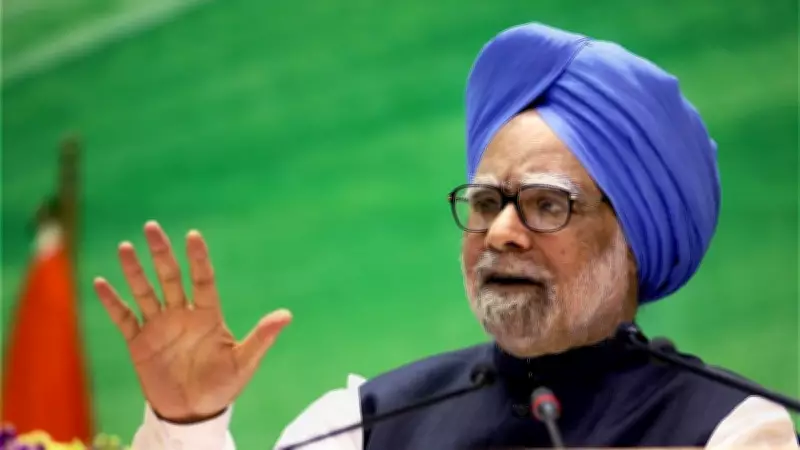
The ongoing deadlock between the government and opposition in the Lok Sabha over the President's Address has taken a historical turn, with the Congress party recalling a similar incident from 2004 involving former Prime Minister Manmohan Singh.
Congress Cites Historical Precedent in Current Parliamentary Standoff
As the current parliamentary session faces disruption, Congress leaders have pointed to the 2004 incident when then Prime Minister Manmohan Singh was reportedly prevented from speaking during the debate on the President's Address. This historical reference comes amid heated exchanges between treasury and opposition benches in the lower house.
Rajya Sabha Proceeds Without Disruption
While the Lok Sabha remains gridlocked, the Rajya Sabha has managed to conduct its proceedings smoothly. The debate on the Motion of Thanks on the President's Address has taken place in the upper house without any significant disruption, creating a stark contrast between the two chambers of Parliament.

The prime minister is now expected to speak on Thursday in the Rajya Sabha, where the legislative business has continued uninterrupted. This development suggests a strategic shift in parliamentary engagement, with the government focusing on the upper house where proceedings have remained orderly.
Parliamentary Dynamics Under Scrutiny
The current situation highlights the evolving dynamics of Indian parliamentary democracy, where historical precedents are being invoked to contextualize contemporary political standoffs. The 2004 incident involving Manmohan Singh serves as a reference point for understanding the current impasse, demonstrating how parliamentary traditions and disruptions have long been part of India's legislative process.
As political observers watch the developments closely, the contrasting situations in the two houses of Parliament raise important questions about legislative productivity and political strategy. The ability of the Rajya Sabha to conduct its debate smoothly while the Lok Sabha remains deadlocked presents an interesting study in parliamentary functioning.






