Congress Intensifies Criticism, Labels PM Modi as India's "Greatest Distorian"
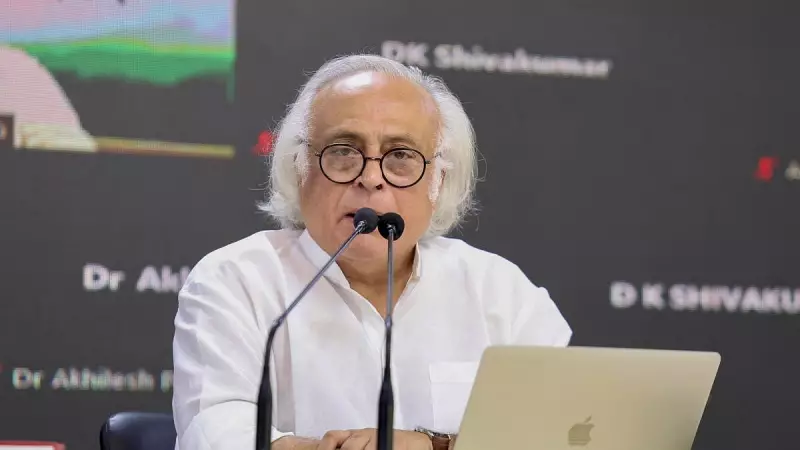
In a sharp escalation of political rhetoric, the Indian National Congress has launched a scathing attack on Prime Minister Narendra Modi, accusing him of being the country's "greatest distorian" who is actively rewriting and distorting historical narratives. The controversy has reignited with Congress general secretary in-charge of communications, Jairam Ramesh, leading the charge with pointed allegations that have stirred significant political debate.
Vande Mataram Controversy Recalled as Evidence
The Congress party has specifically recalled the Vande Mataram row as a prime example of what they term as historical manipulation. According to party officials, this episode from recent political history demonstrates a pattern of behavior where national symbols and historical contexts are being reinterpreted to serve particular ideological agendas. The reference to this controversy adds a cultural and patriotic dimension to the ongoing political confrontation.
Allegations of Systematic Demolition of Gandhi's Legacy
Jairam Ramesh has made particularly serious allegations regarding Mahatma Gandhi's memory and legacy. The Congress leader claims that Prime Minister Modi is "systematically demolishing" the Father of the Nation's contributions and philosophical foundations. This accusation represents one of the most direct confrontations over historical interpretation in recent political discourse, touching upon fundamental questions about how India remembers its independence struggle and founding principles.

MGNREGA Repeal Cited as Latest Instance
The Congress communication chief pointed to the recent repeal of the Mahatma Gandhi National Rural Employment Guarantee Act (MGNREGA) as what he describes as the latest instance of this pattern. According to Ramesh, dismantling this social welfare scheme, which bears Gandhi's name and was designed to address rural poverty, represents more than just policy change—it symbolizes an erosion of the Gandhian vision for rural development and economic justice.
The political implications of these allegations are significant, as they frame policy decisions within a broader narrative about historical preservation and ideological direction. The Congress party appears to be positioning itself as the defender of what it considers authentic historical memory against what it characterizes as revisionist tendencies.
Broader Political Context and Implications
This development occurs within a charged political atmosphere where historical interpretation has become increasingly contested territory. The allegations touch upon several sensitive areas:
- The appropriate commemoration of national icons and freedom fighters
- The relationship between policy decisions and ideological frameworks
- The role of historical narrative in contemporary political identity
- Contesting visions of India's development path and social priorities
As the debate unfolds, it raises fundamental questions about how political parties engage with history, how national memory is constructed and contested, and what constitutes legitimate versus distorted historical interpretation in a democratic society.