

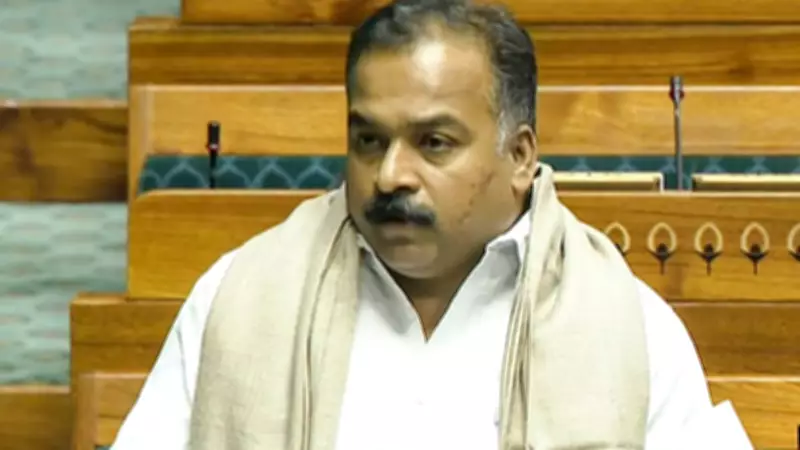
Congress MP Manickam Tagore Condemns Government's Defense Secrecy Culture
Congress Member of Parliament Manickam Tagore launched a sharp critique against the government on Friday, denouncing what he described as a "culture of excessive secrecy" surrounding defense and armed forces matters. His comments were prompted by news reports indicating that the Centre is developing detailed guidelines for serving and retired armed forces personnel who intend to publish books in the future.
Proposed Guidelines and Parliamentary Context
The proposed guidelines are designed to outline a formal process that must be followed before any manuscript receives clearance for publication. Tagore expressed his concerns in a post on social media platform X, emphasizing that rules should not be employed to silence voices or conceal uncomfortable truths from the public.
He stated, "In 2029, when Rahul Gandhi becomes Prime Minister, one of the guidelines that must change is this culture of excessive secrecy. National security must always be protected. But using rules to silence voices and hide uncomfortable truths from the people of India cannot be justified." Tagore further added, "Our armed forces deserve dignity. Our democracy deserves transparency."

Background: Parliament Session and Controversy
These remarks follow a significant incident during the Parliament Budget session in early February. Leader of the Opposition in the Lok Sabha, Rahul Gandhi, displayed excerpts from an unpublished memoir of former Army Chief General MM Naravane. During his presentation, Gandhi was repeatedly interrupted by BJP leaders Rajnath Singh and Kiren Rijiju.
Gandhi accused Prime Minister Narendra Modi of "not fulfilling responsibility" during the 2020 India-China military clashes in Ladakh. In response, Defense Minister Rajnath Singh objected, questioning whether the cited book had been formally published or authenticated. He informed the House that unpublished material could not be quoted and accused the Congress leader of misleading Parliament.
Speaker Om Birla subsequently ruled that unpublished books or magazine articles not directly related to proceedings could not be read out in the House. Despite this ruling, Congress leaders maintained that the excerpts they referred to were authentic and available through a published magazine article citing the memoir.
Broader Implications and Political Stance
The controversy highlights ongoing tensions between the government and opposition regarding transparency in defense matters. Tagore's criticism underscores a broader political debate about balancing national security with democratic accountability. The proposed guidelines for armed forces publications have sparked discussions about freedom of expression and the right to information within sensitive sectors.
As the political landscape evolves, this issue is likely to remain a focal point in parliamentary discussions and public discourse, reflecting deeper concerns about governance and transparency in India's defense establishment.






