Congress and Left Front to Contest West Bengal Elections Separately After Alliance Ends
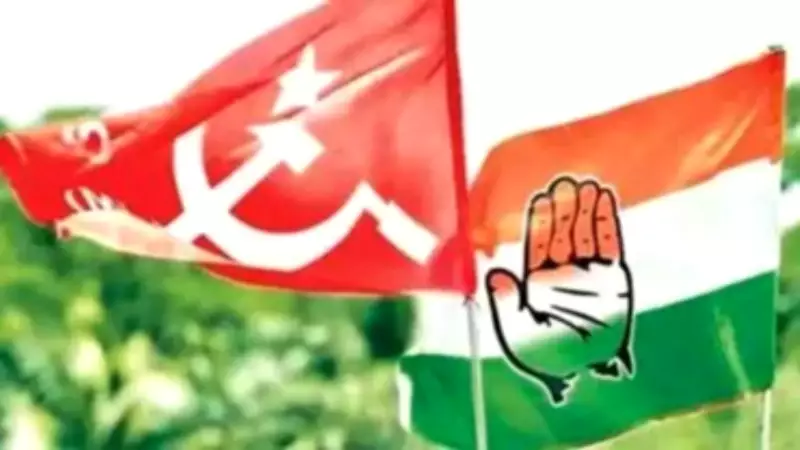
The political landscape in West Bengal has undergone a significant shift as the Congress party and the Left Front have decided to contest the upcoming state assembly elections independently. This decision comes after the Congress formally ended its alliance with the Left earlier this month, marking a pivotal moment in the state's politics where the Trinamool Congress (TMC) and the Bharatiya Janata Party (BJP) are the dominant forces.
Rationale Behind Congress' Decision to Go Solo
The Congress' move to contest alone has sparked speculation, given its diminishing presence in West Bengal. A senior leader from the West Bengal Congress unit explained that the central leadership believes the party has little to lose by fighting independently. "The central leadership feels the party has nothing left to lose, and we should therefore fight the battle on our own," the leader stated, requesting anonymity.
This leader acknowledged that the electoral contest is likely to be dominated by the TMC and the BJP, with the breakdown of the alliance effectively eliminating space for a third pole in Bengal's politics. "This election will now be fought almost entirely on the TMC-versus-BJP axis," the leader added, highlighting the party's focus on consolidating its own vote share rather than relying on alliance arithmetic.

Political observers note that the relatively conciliatory approach of the current state Congress chief, Subhankar Sarkar, made it easier for the central leadership to end the Left alliance. This contrasts with the previous leadership under ex-Lok Sabha MP Adhir Ranjan Chowdhury, who was a known critic of Mamata Banerjee and had set aside differences with the Left to challenge a common adversary.
Left Front's Response and Strategic Options
After a period of silence, the Left Front responded through CPI(M) general secretary MA Baby, who criticized the Congress for adopting a sectarian approach in West Bengal. "We can cooperate with them only if they realise the importance of holding hands with secular, democratic, and progressive forces," Baby said in Kolkata on February 13.
Baby emphasized that in the struggle against communal forces, particularly the BJP, the Left favors alliances with like-minded parties, including the Congress, wherever feasible. Some Left leaders indicate that the bloc now intends to formalize all political arrangements, both official and tacit, to allow time for candidate selection with allies before finalizing lists.
Impact of Congress' Exit on Left Bloc and Electoral Dynamics
The Congress' absence from any prospective Left-led coalition could limit the bloc's electoral impact, potentially leading to a division of votes that might benefit the TMC. Political analysts suggest that a ground-level understanding between the two cannot be ruled out, despite their split.
Complicating matters, the Left and Congress are direct rivals in Kerala, which is scheduled to hold elections around the same time as West Bengal. The Left secured a second consecutive term in Kerala in 2021, breaking the long-standing pattern of power alternating between the two. With anti-incumbency likely after a decade of Left rule, the Congress sees an opportunity to reclaim power in Kerala.
Contesting separately in West Bengal allows both parties to avoid uncomfortable questions about Kerala. Yet, a tacit understanding in Bengal would signal that despite sharp political attacks, there is no irreparable strain in their broader political relationship.
Historical Context: From Arch-Rivals to Allies and Back
The alliance between Congress and the Left in West Bengal was born out of necessity, as both were pushed to the margins by the rise of Mamata Banerjee and the TMC. Since toppling the Left in 2011, the TMC has expanded its dominance, crossing the 200-seat mark in successive assembly elections. This forced Congress and the Left to join hands, only to face a new challenger in the BJP.

In 2019, the BJP increased its Lok Sabha tally in West Bengal from two seats to 18, reducing the TMC's count. In the 2021 assembly polls, the BJP cemented its role as Banerjee's principal rival by winning 77 seats, a sharp jump from just three in 2016. With the TMC and BJP firmly entrenched, Congress and the Left were reduced to marginal players.
Electoral Performance and Alliance Breakup History
The current breakup is not the first for Congress and the Left in West Bengal. They parted ways in March 2019 ahead of the Lok Sabha elections, reunited in December 2020 for the assembly polls, and have now split again. Key electoral performances include:
- Congress last fought independently in 2006, securing 21 seats.
- In 2011, it doubled its tally to 42 in alliance with the TMC.
- The 2016 assembly polls marked their first formal alliance, with Congress winning 44 seats and Left allies 33.
- In 2021, the alliance struggled, with the Indian Secular Front (ISF) securing the Left Front's lone seat and Congress later winning a by-election.
These numbers suggest the alliance has struggled to translate cooperation into meaningful gains, except to some extent in 2016.
A Double-Edged Sword for Congress and Left
The Congress' decision to contest alone is a bold but risky strategy. While securing a win or even a second-place finish appears unlikely, the party could aim to establish itself as the state's third major political force. This may not translate into many seats but could reflect in its overall vote share. Conversely, there's a real risk of being pushed further to the margins.
As the ballot approaches, both Congress and the Left Front face a crucial test of their relevance, voter base, and ability to reclaim even a fraction of their past influence. The coming weeks will reveal whether they can mount a revival or continue their slide toward the margins of state politics in West Bengal.