

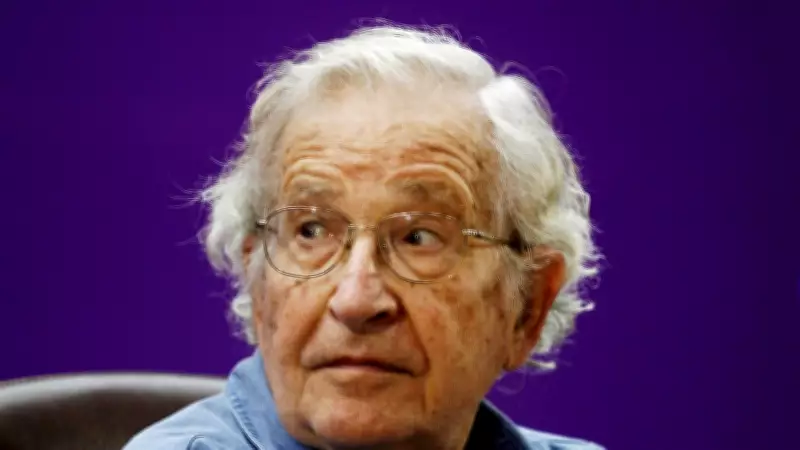
Noam Chomsky's Epstein Emails Trigger Moral Reckoning Among Leftist Followers
Recently unsealed court documents have exposed extensive email correspondence between the renowned Jewish-American scholar and activist Noam Chomsky and the convicted sex offender Jeffrey Epstein. These disclosures have ignited a fierce backlash online, particularly among left-leaning audiences who have long revered Chomsky's incisive political critiques.
Damaging Revelations: Advice to 'Ignore' Allegations
The most damaging revelation centers on an exchange from February 2019. As the Miami Herald published fresh investigations into Epstein's crimes and a controversial plea deal, Epstein emailed Chomsky seeking advice on handling what he called the "putrid press."
In a reply signed "Noam" and forwarded by Epstein to his lawyer and publicist, Chomsky offered a clear strategy. "I've watched the horrible way you are being treated in the press and public. It's painful to say but I think the best way to proceed is to ignore it," the email stated. It further criticized the climate around abuse allegations: "That's particularly true now with the hysteria that has developed about abuse of women, which has reached the point that even questioning a charge is a crime worse than murder." This advice was given 11 years after Epstein's first conviction for soliciting a minor.

Financial and Social Entanglements
The documents, reported by the BBC and The Guardian and released by the US Justice Department, indicate a multifaceted relationship that went beyond casual acquaintance. They show Epstein deeply involved in Chomsky's financial family disputes, with the scholar's wife and spokesperson, Valeria Chomsky, emailing Epstein's associates to arrange for a $20,000 cheque to fund a "Chomsky challenge" in linguistics.
Epstein also advised Chomsky during a complex financial dispute with his children over a flat purchase. When Chomsky's estate attorney drafted a pointed email about a $187,000 payment discrepancy, Chomsky sought Epstein's approval before sending it. "You should OK her sending but admonish [her] for being unwilling to ask tough questions. NONSENSE," Epstein replied.
Socially, the emails reveal familiar banter and planning. In 2016, after a meeting, Epstein wrote, "Come to New York or Caribbean?" Chomsky replied: "Valeria's always keen on New York. I'm really fantasising about the Caribbean island." Other emails discuss arranging a dinner with Epstein and the "Allens," likely referring to Woody Allen and Soon-Yi Previn.
The files also show Chomsky used an Epstein-provided contact to email Steve Bannon in 2018, writing, "Lots to talk about." Bannon replied, "Agree. Would love to connect."
Public Reaction and Widespread Disillusionment
The disclosures have provoked a sharp and widespread backlash online, with social media commentary reflecting deep disillusionment among Chomsky's followers. Many users describe a "moral question" in reconciling his influential work with his associations with Epstein.
Vijay Prashad, a long-time friend of Chomsky, tweeted: "My friendship with Noam Chomsky goes back decades. But, reading his friendly correspondence with Jeffery Epstein made me shudder. I know that Noam cannot defend himself. But in many ways, the emails speak for themselves."
Other online critics have seized on the emails to revisit past controversies surrounding Chomsky's comments on regimes such as the Khmer Rouge, weaving the Epstein revelations into a broader narrative of alleged ethical failings. Emir Suljagić tweeted: "Noam Chomsky defended the Khmer Rouge, supported Slobodan Milošević, and denied the Bosnian genocide. Epstein is only the latest entry on the list of mass murderers and predators he has cultivated over the course of his career."
A Complicated Legacy
Chomsky, now 97 and a professor emeritus on unpaid medical leave from the University of Arizona, did not immediately respond to specific requests for comment on the latest email disclosures. The documents do not allege criminal wrongdoing by Chomsky, but they present a stark contradiction between his public intellectual stance—rigorously dissecting power and propaganda—and his private counsel to a man convicted of serious sex crimes.

The image that emerges is of a figure who, while critiquing systemic failings, appears to have dismissed the specific allegations against a powerful friend as media-driven "hysteria." For many of his followers, the personal loyalty demonstrated in these emails has irrevocably complicated, if not tarnished, a once-untouchable legacy, sparking a profound reckoning within leftist circles about the alignment of personal ethics with public advocacy.





