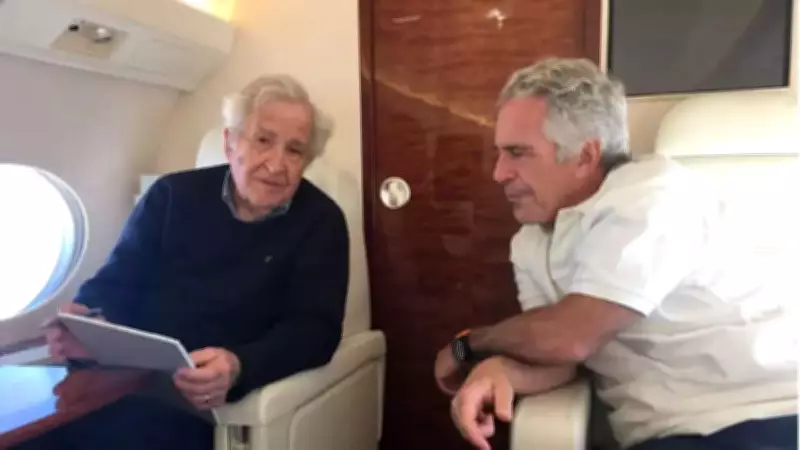
Freshly disclosed emails from late 2016 have unveiled intriguing political maneuvers involving Valeria Chomsky, wife of renowned linguist and political commentator Noam Chomsky, and the convicted financier Jeffrey Epstein. The correspondence, part of a massive document release by the U.S. Department of Justice, shows Valeria Chomsky actively seeking Epstein's assistance to broker a connection with then-President-elect Donald Trump shortly after his unexpected electoral victory.
November 2016: Post-Election Outreach Through Epstein
In the immediate aftermath of Donald Trump's triumph in the 2016 presidential election, Jeffrey Epstein reached out to Valeria Chomsky via email on November 13, 2016, with a brief but telling message: "we called it." Valeria Chomsky responded positively, confirming her alignment with this sentiment. She elaborated in a subsequent email that same day, asserting she had foreseen Trump's political ascent even before the primary elections began.
Valeria Chomsky claimed to have publicly predicted Trump's rise during various social gatherings, including meetings, lunches, and dinners, though she noted her forecasts were often met with skepticism and disbelief from others. Earlier on November 13, she reminded Epstein of a prior conversation where he had inquired about individuals Noam Chomsky might wish to engage with. Seizing the moment, she pointed directly to Trump, writing: "Here is a guy! Can you arrange it? He could make good use of Noam's advices."

Later that day, Valeria Chomsky sent another email to Epstein, this time copying her husband Noam Chomsky. In this message, she explicitly expressed her own political ambitions, stating: "Now I want my position as a political analyst (preferably in the White House)." This reveals not only a desire for access but also a personal interest in securing a role within the incoming Trump administration.
December 2016: Academic Exchange Turns Political
The email trail continued into late December 2016. On December 26, Epstein emailed Noam Chomsky following an earlier academic discussion, abruptly shifting the conversation to Donald Trump. Epstein relayed a provocative anecdote, claiming that "one of Donald's closest people" had remarked that Trump had authored three books, which "makes him one of the few people in the world that has written more books than he has read."
Noam Chomsky responded with a critical assessment, noting he had read comments from Trump's ghostwriter and describing them as "pretty scary." He further commented on Trump's use of social media, observing that regardless of Trump's personal intentions, his tweets would be interpreted and acted upon by various domestic and international actors. Valeria Chomsky was copied on this entire exchange, indicating her continued involvement in these discussions.
Broader Context of Epstein Document Release
These emails form part of an extensive new collection of Epstein files released by the U.S. Department of Justice in early 2026. The disclosure came after sustained bipartisan pressure for greater transparency regarding Epstein's activities and connections. The release encompasses millions of pages of internal emails, investigative notes, court filings, and correspondence spanning more than two decades of federal investigations.
This comprehensive document dump includes materials from both the Florida investigation that resulted in Epstein's controversial 2008 plea deal and the later New York sex-trafficking case that was abruptly terminated by his death in custody in 2019. Congress mandated this release following years of criticism that prosecutors had concealed crucial information from Epstein's victims while protecting influential individuals who remained associated with him even after his conviction for soliciting a minor.
Unlike previous, more limited disclosures, this latest tranche of documents illuminates how Epstein maintained social and political operations long after his criminal behavior became publicly known. The records depict him cultivating relationships across ideological divides, positioning himself as a behind-the-scenes fixer who could facilitate introductions, offer counsel, and connect academics, politicians, financiers, and media figures.

While the documents do not allege criminal conduct by many of those named, they reveal the remarkable extent to which Epstein retained access, credibility, and influence within elite circles well into the late 2010s. The Chomsky emails exemplify this dynamic, showing how Epstein was perceived as a conduit to political power during a period of significant upheaval following Trump's election.
Significance of the Chomsky Correspondence
The Chomsky emails have attracted particular scrutiny within this broader context. They demonstrate how discussions about accessing the president-elect and securing positions within his administration were occurring privately, mediated by Epstein, within mere days of the 2016 election results. This highlights the informal channels through which political influence was sought during a transitional moment in American politics.
The correspondence underscores Epstein's role as an intermediary between intellectual figures and political power brokers, revealing how individuals sought his assistance to navigate the new political landscape shaped by Trump's victory. These emails provide a window into the behind-the-scenes maneuvering that often characterizes political transitions, mediated by controversial figures with extensive networks.
The release of these documents continues to fuel debates about transparency, accountability, and the intersections of power, politics, and justice in contemporary society.