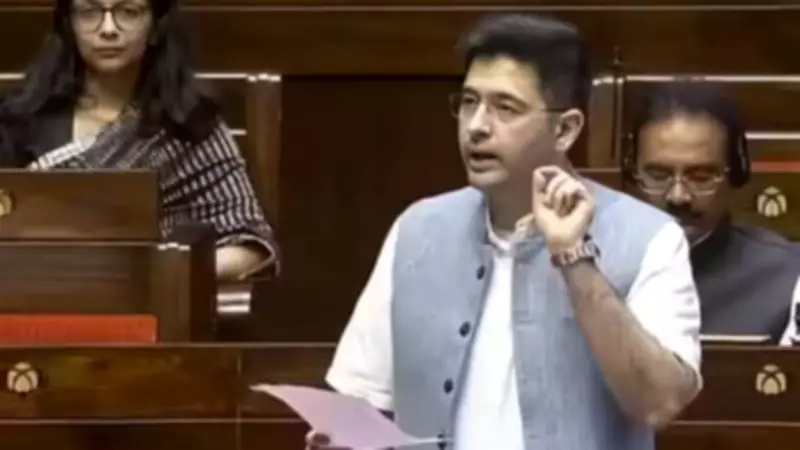
Raghav Chadha's Parliamentary Remark Ignites AAP Unity Speculation
A routine address in the Rajya Sabha transformed into a significant political moment when Aam Aadmi Party MP Raghav Chadha made a striking comment about his own party position. During the re-election proceedings for Deputy Chairman Harivansh Narayan Singh, Chadha referred to himself as a "recently removed Deputy Leader" of the AAP in the Upper House.
Veiled Swipe at Party Leadership
The remark, delivered during formal parliamentary proceedings, appeared to be a subtle but pointed critique of his own party's internal decisions. Political observers noted that Chadha's choice of words was particularly significant given the context of the session and the absence of several senior AAP leaders from the proceedings.
Chadha further highlighted this absence during his address, stating that key party figures were not present for the important parliamentary event. This additional observation added layers to the unfolding political narrative and raised questions about coordination within the party's parliamentary strategy.

Internal Dynamics Under Scrutiny
The statement has triggered widespread discussion about the current state of affairs within the Aam Aadmi Party. Several political analysts have pointed to:
- Possible differences in leadership circles
- Evolving power dynamics within the party structure
- Communication gaps between different levels of party leadership
- The timing of such remarks during crucial parliamentary sessions
While the AAP has not issued any official clarification regarding Chadha's comments or his current status within the party hierarchy, the moment has captured significant attention both inside and outside Parliament.
Political Signals in Formal Settings
This incident demonstrates how internal political messaging often surfaces in subtle ways during official proceedings. Parliamentary sessions, typically viewed as formal arenas for legislative debate, frequently become platforms for political signaling and internal party communications.
The remark has now become a focal point for understanding the AAP's current political positioning and internal cohesion. Political commentators are analyzing:
- The implications for party unity ahead of upcoming political challenges
- How such public remarks might affect party discipline
- The broader message being sent to both party members and political opponents
- Potential shifts in the party's parliamentary strategy
As discussions continue, Chadha's comment serves as a reminder that political dynamics often play out in unexpected ways, with seemingly minor remarks sometimes revealing significant underlying tensions within political organizations.