BNP Leader's Daughter Takes to Dhaka Streets in Rickshaw Campaign
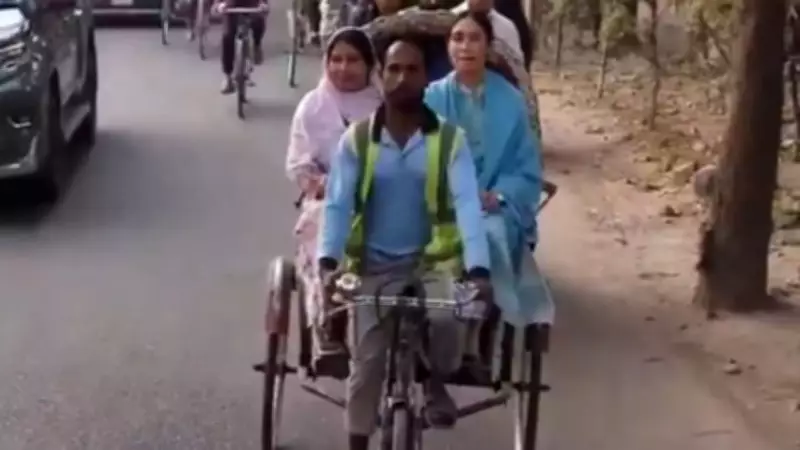
In a striking display of grassroots political engagement, Zaima Rahman, daughter of Bangladesh Nationalist Party (BNP) chief Tarique Rahman, has taken to the streets of Dhaka on a traditional rickshaw to campaign for her father. This unconventional campaign approach comes just days before the crucial February 12 general elections that will determine Bangladesh's political future.
Direct Voter Appeal in Dhaka-17 Constituency
Videos circulating online show the London-trained barrister riding through busy neighborhoods of the capital, accompanied by Fatema Khatun, the longtime caregiver to former Prime Minister Khaleda Zia. Zaima Rahman personally handed out campaign pamphlets and appealed directly to voters in the high-profile Dhaka-17 constituency where her father is contesting.
Beginning her outreach at Gulshan Police Plaza, Zaima moved systematically through streets, shops, cafes and office buildings, distributing leaflets bearing the BNP's distinctive election symbol - the "Sheaf of Paddy." She was seen engaging in conversations with pedestrians, rickshaw pullers, street vendors and office staff, making a personal connection with potential voters.

"My father, Tarique Rahman, is the 'Sheaf of Paddy' candidate in Dhaka-17. I am asking for your votes in his favour," she told residents during her campaign trail, bringing a personal touch to the political contest.
High-Stakes Electoral Battle
Tarique Rahman, 60, is considered a front-runner in what will be Bangladesh's first general election since the ouster of long-time Prime Minister Sheikh Hasina in 2024. However, he faces a significant challenge in Dhaka-17 from Jamaat-e-Islami candidate Dr SM Khalekuzzaman, a popular local physician.
The BNP supremo recently rejected a proposal from Jamaat-e-Islami for a unity government, asserting confidence in his party's prospects. "How can I form a government with my political opponents, and then who would be in the opposition?" he said in a recent interview, expressing hope that rivals would play the role of a "good opposition" if elected.
Rahman returned to Bangladesh in December after nearly two decades in exile, following the deteriorating health of his mother, Khaleda Zia, who passed away on December 30, 2025. Zia made history as Bangladesh's first woman prime minister.
Historic Election Context
The February 12, 2026 general elections will elect 300 members to the Jatiya Sangsad (National Parliament), accompanied by a constitutional referendum on the July Charter. This represents one of the largest democratic exercises of the year, with more than 127 million eligible voters and 1,981 candidates contesting the polls.
The election is being conducted under an interim government led by Muhammad Yunus, which has been in place since Sheikh Hasina's removal following a student-led uprising in 2024. Hasina, now in exile in India, was later convicted by a Bangladesh tribunal for allowing the use of lethal force against protesters during the unrest, which resulted in approximately 1,400 deaths - many of them students and teenagers. She has been sentenced to death in absentia.
Transformed Political Landscape
The Awami League, which won the previous four elections under Hasina's leadership, has been suspended and is not participating in the upcoming vote. This development has transformed the contest largely into a bipolar fight between the BNP and the 11-Party Alliance led by Jamaat-e-Islami and the National Citizen Party (NCP).
The electoral field features:
- BNP: 288 nominated candidates, seeking additional seats through allies and independents
- 11-Party Alliance: Contesting 298 seats
- Islami Andolan Bangladesh: Fielded candidates in 253 constituencies
- National Democratic Front (NDF): Contesting 206 seats
- Democratic United Front (leftist parties): In 149 seats
- Greater Sunni Alliance: Contesting 64 constituencies
Key Issues and Electoral Innovations
Campaign issues dominating voter discussions include:

- Unemployment and economic opportunities
- Corruption and extortion concerns
- Proportional representation demands
- Outreach to youth and minority voters
The election will feature two significant innovations: postal voting will be used for the first time in Bangladesh's electoral history, and the "No Vote" option has been reintroduced to the ballot.
With opinion polls indicating an edge for the BNP but a strong showing expected from Jamaat-e-Islami, the February 12 election is poised to fundamentally reshape Bangladesh's political landscape for years to come. The personal campaigning efforts of political family members like Zaima Rahman underscore the high stakes and intense competition characterizing this historic electoral contest.