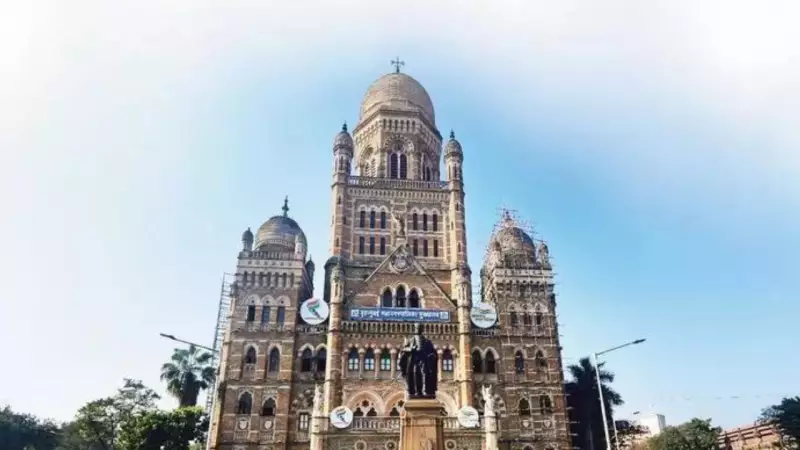
BMC Transforms Spending Strategy with Historic Infrastructure Push
The Brihanmumbai Municipal Corporation has completely transformed its financial approach over the past two years. For the first time in recent memory, India's wealthiest civic body now directs most of its annual budget toward building infrastructure rather than day-to-day operations.
Capital Expenditure Reaches Record Highs
During the 2024-25 financial year, BMC achieved an unprecedented milestone. The corporation spent a staggering Rs 36,900 crore on capital works. This amount represented nearly the entire Rs 37,332 crore originally allocated for infrastructure development that year.
Officials confirm this aggressive spending pattern continues in the current financial year too. Already in 2025-26, BMC has utilized approximately Rs 19,000 crore for capital projects.

"Several major infrastructure works have been taken up simultaneously over the last two years," explained a senior civic official. "Since many of these projects were executed at the same time, capital expenditure has increased substantially."
Major Projects Driving the Change
This spending shift reflects massive investments in transformative infrastructure. Key projects include:
- Coastal Road development
- Goregaon-Mulund Link Road (GMLR)
- Multiple sewage treatment plants (STPs)
- Extensive road concreting projects
- Water conveyance tunnels
- Over a dozen bridge projects including Gokhale, Hancock, Carnac, Delisle and Vidyavihar
Each of these major initiatives involves an outlay exceeding Rs 14,000 crore. Most are currently under construction or have recently been completed.
Fixed Deposits Show Significant Decline
While infrastructure spending surges, BMC's fixed deposits have decreased noticeably. The civic body's FDs peaked at Rs 91,690 crore in 2022 but have now fallen to approximately Rs 80,000 crore.
Several factors contributed to this reduction. In January 2021, the Maharashtra government issued a resolution cutting construction premiums paid by builders by 50%. This decision followed cabinet approval and significantly impacted BMC's revenue streams.
Additionally, BMC has redirected substantial funds to other agencies. The corporation shared around Rs 2,000 crore with the Maharashtra State Road Development Corporation. It also provided Rs 3,800 crore to MMRDA for metro rail projects following instructions from the urban development department.
Furthermore, BMC extended nearly Rs 2,000 crore in financial support to the BEST undertaking during the past year.
Concerns About Basic Services and Accountability
Despite the infrastructure focus, concerns persist about everyday civic needs. Milind Mhaske, CEO of Praja Foundation, emphasized that "while large projects are important, basic services must not be ignored."
Advocate Godfrey Pimenta echoed this sentiment, highlighting persistent issues with poor footpaths, inadequate internal roads, and insufficient open spaces in many neighborhoods.
Political voices have raised questions about oversight mechanisms. Samajwadi Party MLA Rais Shaikh pointed out that the absence of elected corporators creates accountability concerns. Civic officials maintain that all projects undergo proper scrutiny through established administrative channels.
Post-Pandemic Acceleration
The dramatic increase in capital expenditure follows relatively low spending during the pandemic years. Between 2020-21 and 2021-22, most major construction activities either stalled or slowed significantly due to COVID-19 restrictions.
This changed completely over the past two years as BMC aggressively pursued multiple infrastructure initiatives simultaneously. The spending shift represents a deliberate strategy to accelerate Mumbai's development during a period when the corporation functions without elected representatives.