BJP Leader Rakesh Singh Released on Interim Bail to Contest Kolkata Port Assembly Election
In a significant political development, BJP leader Rakesh Singh walked out of Presidency jail in Kolkata on Tuesday afternoon after the Calcutta High Court granted him interim bail. The bail was specifically approved to allow Singh to contest the upcoming assembly polls from the Kolkata Port constituency. The court's decision came with a clear warning: if Singh does not receive the official party nomination, the state government can apply for the cancellation of his bail.
Court Order and Bail Conditions
Justice Kausik Chanda, in his bail order, explicitly stated, "It is clarified that in the event the petitioner does not receive the party nomination to contest the election, the state shall be at liberty to apply for cancellation of bail." This condition underscores the court's intent to ensure the bail is strictly for electoral purposes. The deadline for filing nominations is April 9, adding urgency to the situation.
Political Reactions and Party Stance
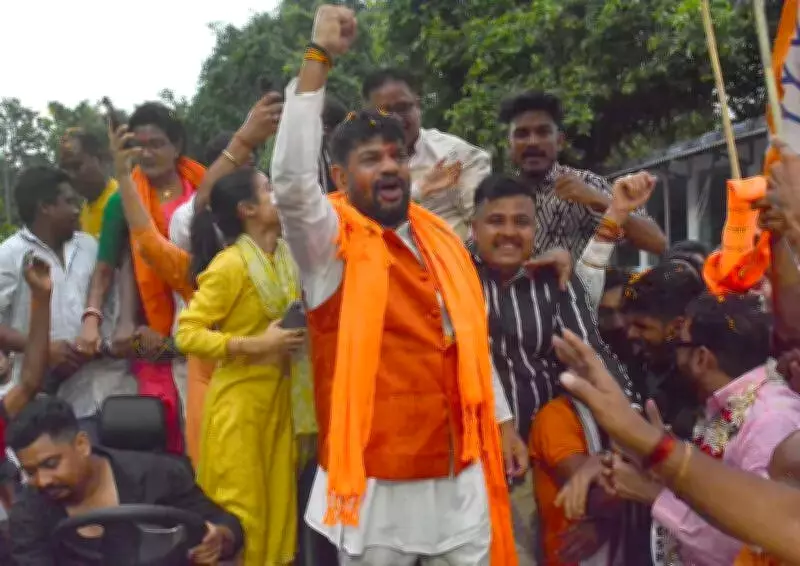
Outside the prison, Singh was greeted by a crowd of enthusiastic supporters, though he has not yet been formally announced as the BJP's candidate. However, the party has informed the High Court that Singh will indeed be their candidate. A senior BJP leader indicated that the party is likely to announce Singh as its candidate on Wednesday, with plans for him to file his nomination on April 9.

The state government strongly opposed Singh's bail application, citing his criminal antecedents. According to the Bengal government, Singh is listed on the Election Commission portal as a "history-sheeter" and a "trouble monger." In response, Singh claimed in court that in all prior cases, he has either been granted bail or anticipatory bail, arguing against the state's characterization.
Criticism from Unlikely Quarters
Singh's release sparked a sharp attack from an unexpected source: Sona Pappu, also known as Biswajit Poddar, who is currently on the run. Pappu took to social media to question what he called "BJP's double standards" in selecting Singh as a candidate while simultaneously facing scrutiny from central agencies and police. This criticism comes just a day before the Enforcement Directorate (ED) has summoned Pappu for questioning on April 8, adding a layer of political intrigue to the situation.
Singh's Post-Release Actions
After his release, Singh performed a puja but refrained from speaking with the media. He also did not post any statements on social media, maintaining a low profile amidst the heightened political activity. This silence contrasts with the excitement among his followers and the ongoing debates about his candidacy.
The case highlights the intersection of legal and political dynamics in West Bengal's electoral landscape, with implications for both the BJP's campaign strategy and the state's law enforcement priorities.