BJP's Strategic Gambit: Navigating Caste Dynamics in Uttar Pradesh
As the political landscape in Uttar Pradesh begins to heat up ahead of the crucial 2027 assembly elections, the Bharatiya Janata Party (BJP) finds itself at a critical juncture. Two significant developments have emerged as focal points in this pre-electoral maneuvering: the implementation of UGC equity guidelines and a high-profile confrontation with the Shankaracharya of Joshimath. These moves have sparked intense debate about whether the ruling party is miscalculating its approach or deliberately steering the narrative to consolidate its position.
The UGC Equity Guidelines Controversy
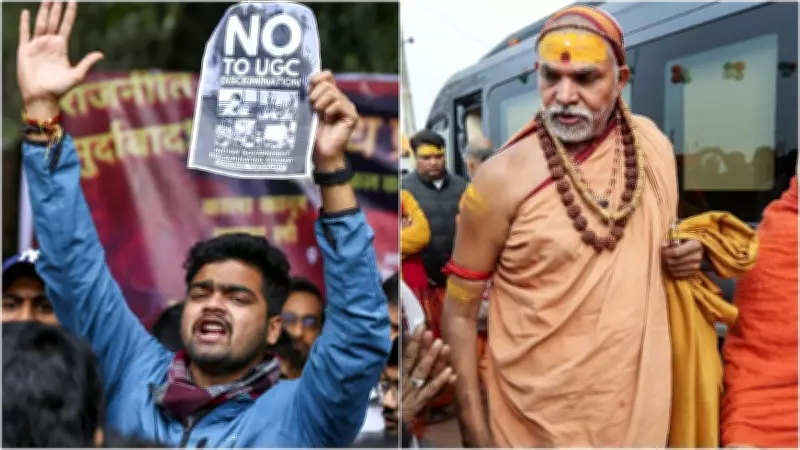
The University Grants Commission's equity guidelines have become a flashpoint in the ongoing discourse around caste representation and social justice. These guidelines, aimed at promoting greater inclusivity in higher education institutions, have been interpreted by various political observers as a strategic intervention by the BJP government. The timing of their implementation, just as political parties begin to position themselves for the 2027 elections, raises important questions about electoral calculus.
Political analysts suggest that the UGC guidelines represent a calculated attempt to address longstanding demands for equitable representation while simultaneously appealing to specific caste constituencies. The move appears designed to demonstrate the BJP's commitment to social justice frameworks, potentially countering opposition narratives about the party's approach to caste-based issues.

Confrontation with the Shankaracharya of Joshimath
Parallel to the UGC guidelines controversy, the BJP has engaged in what many describe as muscle-flexing against the Shankaracharya of Joshimath. This religious figure holds significant influence among certain Hindu communities, particularly those with specific caste affiliations. The confrontation has created ripples through Uttar Pradesh's complex social fabric, where religious authority and caste identity often intersect in politically meaningful ways.
This development is particularly noteworthy because it represents a departure from the BJP's traditional approach of aligning with religious figures. The party appears to be testing the boundaries of its relationship with influential religious leaders while simultaneously asserting its political primacy. This calculated risk suggests either a strategic miscalculation or a deliberate attempt to redefine the terms of engagement with religious authorities ahead of the elections.
Caste Loyalties and Electoral Mathematics
The simultaneous unfolding of these two developments points to a broader strategy concerning caste loyalties in Uttar Pradesh. The state's electoral politics have long been characterized by intricate caste calculations, with parties carefully balancing various caste groups to build winning coalitions. The BJP's current moves appear designed to test several hypotheses:
- Whether the party can maintain its traditional support bases while reaching out to new caste constituencies
- How religious authority intersects with caste identity in determining political preferences
- The extent to which governance initiatives like the UGC guidelines can influence caste-based voting patterns
Political observers note that the 2027 elections will serve as a crucial test for the BJP's caste management strategy. The party's performance will reveal whether its current approach represents a masterstroke of political calculation or a significant misreading of Uttar Pradesh's complex social dynamics.
Strategic Implications for 2027 Elections
As the countdown to the 2027 Uttar Pradesh assembly elections continues, several key questions emerge from the BJP's recent maneuvers:

- Will the UGC guidelines help the party make inroads among communities that have traditionally supported opposition parties?
- How will the confrontation with the Shankaracharya affect the BJP's standing among specific caste groups that revere religious figures?
- Can the party successfully navigate the tension between its development agenda and the complex realities of caste politics?
The coming months will likely see intensified political activity as all parties refine their strategies for the crucial 2027 contest. The BJP's current approach suggests a willingness to take calculated risks in its bid to maintain dominance in India's most populous state. Whether this represents a brilliant strategic move or a potential misstep will only become clear when voters deliver their verdict at the ballot box.