Political Tensions Escalate as BJP Echoes Mamata's Supreme Court Probe Demand
In a significant political development that underscores the deepening trust deficit in India's investigative agencies, the Bharatiya Janata Party has mirrored West Bengal Chief Minister Mamata Banerjee's demand for a Supreme Court-monitored investigation, applying it to a different case. The unfolding scenario reveals how political parties are increasingly turning to the judiciary for oversight amid allegations of compromised probe mechanisms.
Mamata Banerjee's Initial Demand for Ajit Pawar Death Probe
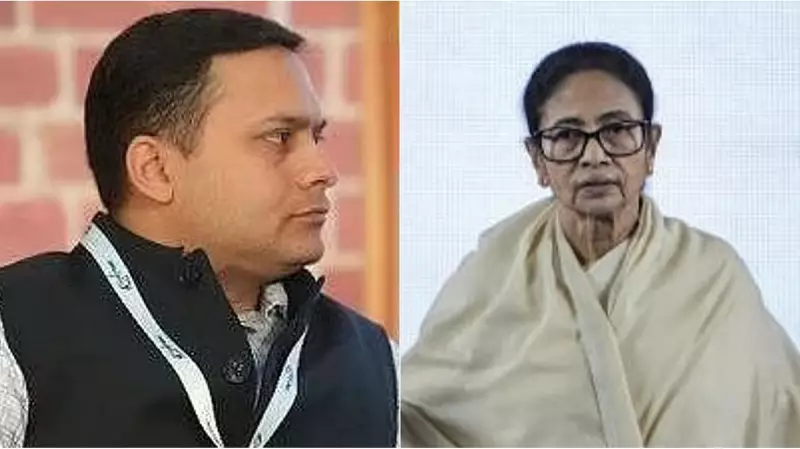
The sequence of events began when Mamata Banerjee, the fiery Trinamool Congress chief, publicly called for a Supreme Court-monitored investigation into the death of Nationalist Congress Party leader Ajit Pawar. Banerjee expressed grave concerns about the integrity of existing investigative agencies, stating emphatically that they had been completely compromised and could not be trusted to deliver impartial justice.
Her demand, made during a press interaction, highlighted growing apprehensions among opposition parties about the independence of law enforcement bodies. Banerjee argued that only the Supreme Court's direct supervision could ensure a transparent and credible inquiry into the circumstances surrounding Pawar's demise.

BJP's Counter-Demand for Nazirabad Fire Investigation
Within hours of Banerjee's statement, senior BJP leader and the party's IT cell head, Amit Malviya, responded with a parallel demand. Malviya called for the investigation into the tragic Nazirabad fire incident to be handed over to a Special Investigation Team monitored by the Supreme Court.
This strategic move by the BJP appears to serve multiple purposes: it acknowledges the legitimacy of seeking judicial oversight while simultaneously applying the same standard to a case that potentially involves different political considerations. Malviya's statement carefully mirrored the language and structure of Banerjee's demand, creating a symmetrical political narrative.
Broader Implications for India's Investigative Framework
The nearly simultaneous demands from two major political parties for Supreme Court-monitored probes reveal several critical aspects of contemporary Indian politics:
- Erosion of Trust: Both parties have implicitly questioned the credibility of regular investigative agencies, suggesting a widespread perception of institutional compromise.
- Judicialization of Politics: There's a growing trend of political actors seeking judicial intervention in matters that traditionally fell within executive purview.
- Strategic Positioning: By making similar demands, both parties attempt to position themselves as champions of transparency while potentially undermining each other's credibility.
The Nazirabad fire, which reportedly claimed multiple lives and caused significant property damage, now finds itself at the center of this political crossfire. Similarly, the circumstances of Ajit Pawar's death, which had already generated considerable political speculation, gain additional layers of complexity through this exchange.
Timing and Political Calculations
The rapid response from the BJP—coming just hours after Banerjee's statement—suggests careful political calculation. By echoing the demand for Supreme Court oversight, the BJP accomplishes several objectives:
- It avoids appearing defensive about investigative agencies often accused of government influence.
- It creates equivalence between the two cases, potentially diluting the political impact of Banerjee's original demand.
- It positions the BJP as equally concerned about procedural integrity, countering opposition narratives about executive overreach.
This exchange occurs against the backdrop of ongoing tensions between central and state investigative agencies, with multiple opposition-ruled states alleging partisan use of central probe bodies. The demands for Supreme Court supervision represent an attempt to bypass these perceived biases entirely.

Potential Outcomes and Constitutional Considerations
Legal experts note that while the Supreme Court has occasionally monitored high-profile investigations through Special Investigation Teams, such interventions remain exceptional rather than routine. The court typically exercises this power in cases involving:
- Extraordinary public importance
- Clear evidence of investigative failure or bias
- Cross-jurisdictional complexities requiring central coordination
Whether the Supreme Court will entertain these parallel demands remains uncertain. The judiciary must balance legitimate concerns about investigative integrity against the constitutional separation of powers and the risk of overburdening the court with executive functions.
What emerges clearly from this political exchange is the deepening crisis of confidence in India's investigative institutions. When major political parties across the spectrum feel compelled to seek direct judicial oversight for basic criminal investigations, it signals systemic concerns that extend beyond partisan politics.
The coming days will reveal whether these demands translate into formal legal petitions and how the Supreme Court responds to what amounts to a bipartisan appeal for its intervention in matters of criminal justice.