BJP and Opposition Spar Over All-Party Meeting on West Asia Conflict
The political landscape in New Delhi witnessed a sharp exchange on Wednesday as the Bharatiya Janata Party (BJP) and opposition parties clashed over the Centre's decision to convene an all-party meeting to discuss the escalating West Asia crisis. The Congress and its allies criticized the move as delayed, questioned Prime Minister Narendra Modi's absence, and faulted the government's foreign policy approach, while the BJP accused the opposition of politicizing a sensitive geopolitical issue.
Opposition Criticizes Timing and PM's Absence
Opposition leaders expressed dissatisfaction with the timing of the meeting, calling it long overdue. They highlighted that during previous major global crises, prime ministers have traditionally led such discussions. Congress whip in the Lok Sabha, Manickam Tagore, emphasized the need for the prime minister's participation, citing examples from past administrations. He stated, "Whenever such meetings are held during serious issues, prime ministers—whether Manmohan Singh, Atal Bihari Vajpayee, or PV Narasimha Rao—have always attended. This is the first time the prime minister is not participating, which is unfortunate."
Tagore further attacked the government's foreign policy, alleging it appeared compromised and warning against external influence. He referenced Rahul Gandhi's earlier comments, saying, "Rahul Gandhi had already said that foreign policy has become a joke. Because of a compromised Prime Minister, the country is in this situation."

Concerns Over Foreign Policy and Supply Chains
Congress MP Ujjwal Raman Singh raised concerns about India's response to the death of Iran's Supreme Leader, urging the government to assert sovereignty in foreign policy decisions. He said, "We expected that when the prime minister spoke in Parliament, he would at least say a word about the killing of the Iranian leader, who had been in power for 36 years. He should have expressed condolences, especially since Iran has supported India in difficult times. Our silence somewhere indicates that our foreign policy has been compromised."
Congress leader Karti Chidambaram stressed the importance of taking all parties into confidence and outlining steps to strengthen supply chains to avoid potential crises. Samajwadi Party MP Dimple Yadav pointed out that the government's approach towards Iran had led to domestic issues, such as problems in LPG supply, affecting citizens. JMM MP Mahua Maji called for caution amid rising global tensions, urging the government to consult MPs before acting.
BJP Defends Government and Targets Opposition
The BJP responded sharply to the opposition's charges, with Union Minister Pralhad Joshi defending the government's actions and calling for unity. He stated, "The all-party meeting is important. The government decides when to call such meetings. When the world is facing such a major crisis, it is the duty of everyone to participate. But irresponsible statements are being made—calling it a failed foreign policy or a dead economy." Joshi also targeted Rahul Gandhi, questioning his role as Leader of the Opposition and dismissing concerns over fuel shortages with a quip: "LPG is not a problem; the LoP himself has become a problem for the country."
BJP MP Dinesh Sharma praised Prime Minister Modi's collective approach, saying, "The prime minister has always worked by taking the opposition along. His speech in the Rajya Sabha was also along these lines—that we must work with a team spirit and involve all states... Today, Prime Minister Modi has become indispensable in global politics and has emerged as a messenger of peace." Sharma further criticized Gandhi, alleging a lack of understanding of foreign policy and claiming politics is a part-time activity for him.
Meeting Details and Broader Context
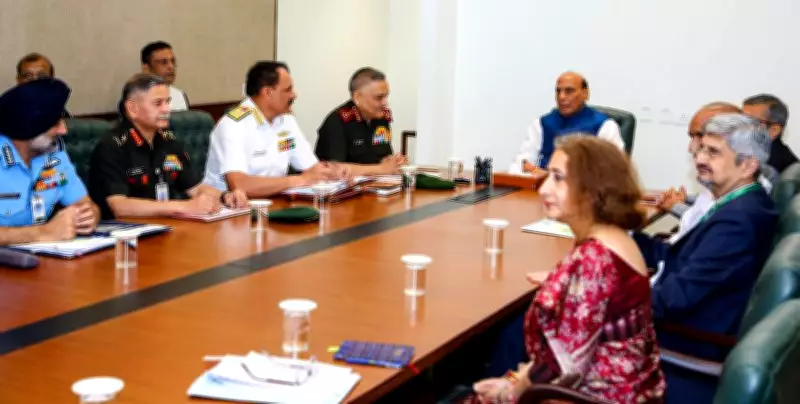
The all-party meeting was convened after Prime Minister Modi's address in Parliament on the West Asia situation. Defence Minister Rajnath Singh was expected to chair the meeting, with External Affairs Minister S Jaishankar in attendance. The discussion aimed to review India's defence preparedness and address the geopolitical implications of the conflict, as highlighted by a recent review meeting involving top defence officials in New Delhi.

This political sparring underscores the deep divisions in Indian politics over handling international crises, with both sides leveraging the issue to score points ahead of future electoral battles. The debate reflects broader concerns about India's foreign policy direction and its impact on domestic stability amid global tensions.