The Bharatiya Janata Party (BJP) has launched a sharp critique of India's first Prime Minister, Jawaharlal Nehru, accusing him of harbouring animosity towards the revered Lord Somnath and glorifying Muslim invaders. This criticism is framed within what the party terms as 'blind appeasement politics' pursued for electoral gains.
The Core Allegations Against Nehru
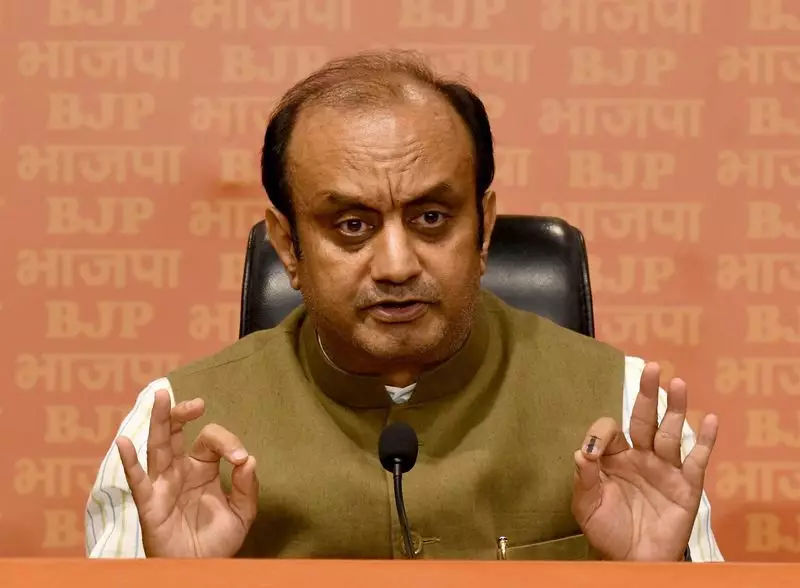
Senior BJP leader and Rajya Sabha member, Sudhanshu Trivedi, presented the party's stance during a press conference. He claimed that historical records and Nehru's own correspondence reveal a deep-seated opposition to the reconstruction of the Somnath temple in Gujarat. According to Trivedi, Nehru was against the then President of India, Dr. Rajendra Prasad, participating in the temple's consecration ceremony in 1951.
Trivedi cited a letter purportedly written by Nehru to then Minister of Food and Agriculture, K.M. Munshi, expressing his displeasure. The BJP's narrative asserts that Nehru's stance was driven by a policy of appeasement towards certain communities, overshadowing national and cultural sentiment.

Contrasting Legacies: Nehru vs. Patel
The BJP's argument draws a clear contrast between Nehru and Sardar Vallabhbhai Patel, India's first Deputy Prime Minister and Home Minister. While Patel is credited with championing the cause of rebuilding the Somnath temple, which was destroyed and looted multiple times by invaders, Nehru is portrayed as an obstructionist.
Trivedi further alleged that Nehru's approach extended beyond the temple issue. He accused the former Prime Minister of glorifying foreign invaders in his book, 'Glimpses of World History', while simultaneously showing disregard for iconic Indian figures and symbols like Lord Ram and the Sengol. This, the BJP claims, was a deliberate strategy to cultivate a vote bank.
Political Motivations and the 'Appeasement' Charge
The timing and content of these allegations are deeply political. The BJP positions itself as a party dedicated to rectifying historical wrongs and celebrating India's indigenous civilizational heritage. By accusing Nehru and, by extension, the Congress party, of 'blind appeasement,' the BJP seeks to underline its own ideological difference.
The charge is that Congress leadership, starting from Nehru, prioritized minority appeasement over equal rights for all citizens, a policy the BJP vehemently rejects. This latest salvo is part of a long-running effort to critically reassess the legacy of the Nehru-Gandhi family and the Congress party's historical narrative.
The controversy reignites the decades-old debate about secularism, cultural identity, and historical interpretation in Indian politics. It underscores the ongoing ideological battle between the BJP's vision of cultural nationalism and the Congress's legacy of pluralistic secularism. The Somnath temple, a powerful symbol of resilience and reconstruction, remains at the heart of this political and historical discourse.