BJP MP Trivedi Condemns Kharge, Alleges Congress Divides India Regionally
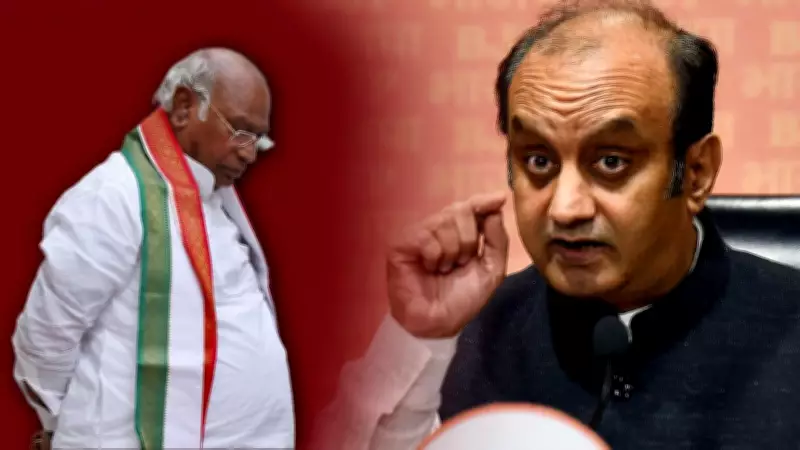
BJP Member of Parliament Sudhanshu Trivedi launched a sharp critique against Congress President Mallikarjun Kharge on Monday, accusing the opposition party of deliberately attempting to fragment India along regional lines. The controversy erupted following Kharge's comments that suggested variations in intelligence levels across different regions of the country.
Accusations of Divisive Politics
Trivedi asserted that Kharge's remarks are part of a broader pattern within the Congress party to sow discord between North and South India. He referenced past statements by Congress leaders concerning the North-South divide and contentious issues like taxation policies, which he claims have historically undermined national unity.
"The Congress has a long history of failing to acknowledge the immense contributions of South India to the nation's development," Trivedi stated emphatically. He urged Kharge to clarify his stance on iconic national figures, including Mahatma Gandhi, Sardar Patel, Jawaharlal Nehru, and Indira Gandhi, questioning whether the Congress respects their legacy of a united India.

Praise for Kerala and BJP's Electoral Gains
In his address, Trivedi also highlighted the achievements of Kerala, commending its residents for their high levels of awareness and educational attainment. He pointed to the BJP's recent municipal election victory in Thiruvananthapuram as evidence of the party's growing influence in the southern state.
Furthermore, Trivedi noted Kerala's early recognition of the concept of 'love jihad,' a term often used in political discourse to describe alleged religious conversions through marriage. "The people of Kerala have shown remarkable foresight in addressing social issues, and their support reflects a shift towards inclusive politics," he added.
Historical Context and Political Implications
The BJP MP's comments come amid ongoing political tensions, with the Congress facing criticism for its approach to regional disparities. Trivedi's allegations suggest that the Congress's rhetoric risks exacerbating divisions rather than fostering national cohesion.
As the debate intensifies, observers note that such exchanges could influence public opinion ahead of future elections, particularly in southern states where regional identity remains a sensitive topic. The BJP's strategy appears to focus on positioning itself as a unifying force, in contrast to what it portrays as the Congress's divisive tactics.