BJP MP's Dramatic Display of Artificial Limbs in Rajya Sabha Triggers Political Storm
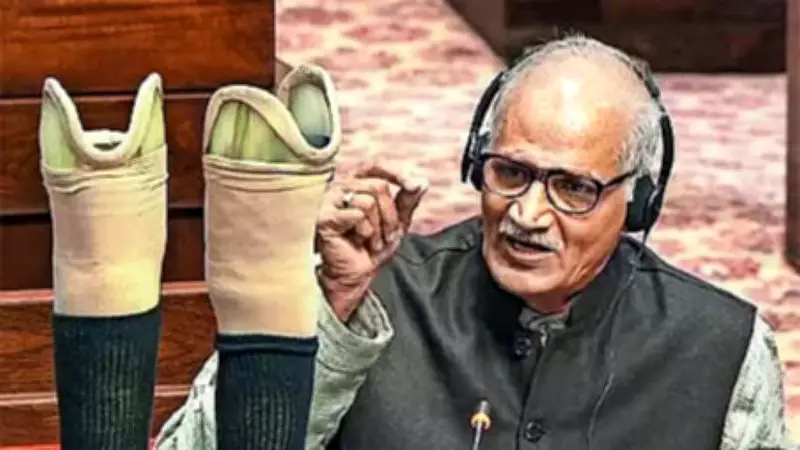
In a highly charged and unprecedented moment in India's parliamentary history, BJP nominated member C Sadanandan created a dramatic scene in the Rajya Sabha on Monday by placing his artificial limbs on the table during his maiden speech. This striking visual gesture immediately sparked a sharp confrontation with CPM leaders and led to a contentious point of order being raised in the Upper House.
Emotional Recollection of Alleged Political Violence
The Kerala-based parliamentarian, who transitioned from being a school teacher to a politician, made this powerful demonstration while recounting a violent incident he claims occurred thirty-one years ago. Sadanandan attributed this life-altering attack to workers associated with the Communist Party of India (Marxist).
While initiating the discussion on the President's address and motion of thanks, the BJP MP explained his motivation behind the dramatic display. "I wanted to show before the nation and people what is democracy," Sadanandan declared from his seated position, necessitated by his disability.

He provided harrowing details of the alleged assault: "Those who were roaring about democracy committed an attack upon me 31 years ago in Kerala. I was returning home when organised criminals caught me from behind, put me down on the road and cut my legs, shouting Inquilab Zindabad."
Immediate Opposition Backlash and Heated Exchange
The placement of prosthetic limbs on the parliamentary table drew immediate objections from opposition benches. CPM member John Brittas swiftly rose to raise a point of order against what he considered an inappropriate display of objects within the House chamber.
This parliamentary challenge prompted Sadanandan to launch a counterattack. "I want to show before the nation and people what democracy is. You are always talking about democracy, tolerance and humanity. Your commitment is based on political violence, which is not good for democracy," the BJP MP retorted, directly challenging Brittas not to display intolerance.
Parliamentary Procedure and Continuing Tensions
Following Brittas' point of order, the artificial limbs were eventually removed from the table, but not before creating significant uproar and capturing national attention. The CPM member argued that displaying objects violated parliamentary rules, noting: "You (Chairman) have banned the display of objects. He (Master) has been coming to the House for so many days, walking with artificial limbs. It is unfortunate that he lost them."
Chairman CP Radhakrishnan confirmed the removal of the limbs from the table while making a pointed observation: "Let you follow the same strictness, and I want to see you have the same stand."
Sadanandan concluded his intervention with a powerful final remark: "I regret I could not stand while making my maiden speech due to torture by CPI-M."
Aftermath and Leadership Intervention
The dramatic episode continued to reverberate through parliamentary proceedings. Leader of the House JP Nadda later intervened, urging the Chair to expunge what he described as undesirable words used by Brittas during the heated exchange.
This incident highlights several significant aspects of contemporary Indian politics:
- The emotional and personal nature of political narratives in parliamentary debates
- Tensions between parliamentary procedure and symbolic political expression
- Historical allegations of political violence resurfacing in current political discourse
- The intersection of disability, personal experience, and political messaging
- Ongoing political rivalries between national parties playing out in parliamentary settings
The Rajya Sabha episode serves as a stark reminder of how personal histories and political ideologies can collide dramatically within India's democratic institutions, creating moments that resonate far beyond the parliamentary chamber walls.