Assam's 2026 Assembly Elections: A Clash of Titans and Surnames
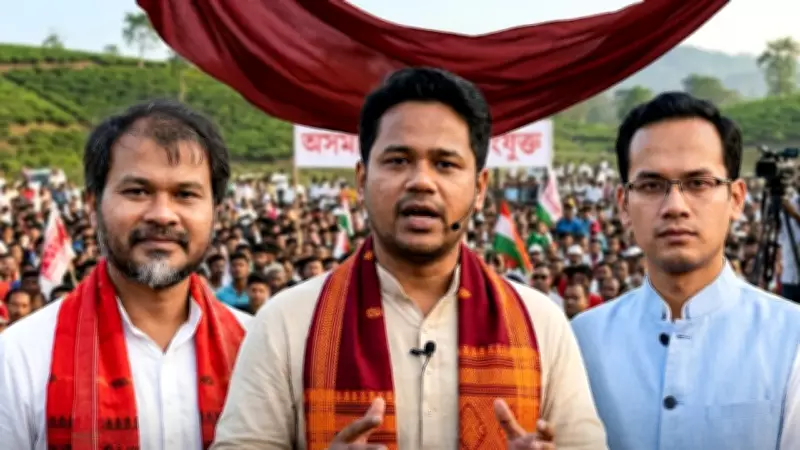
As Assam approaches the April 9 assembly elections, the political landscape is sharply defined by a dramatic narrative: the Bharatiya Janata Party (BJP) versus the 'three Gogois.' This framing has turned the electoral contest into a high-stakes battle, blending personal rivalries, shifting loyalties, and deep-seated identity politics.
The Electoral Stakes and Opposition Unity
At its core, this is a straightforward electoral fight. The BJP, under Chief Minister Himanta Biswa Sarma, is aggressively seeking a third consecutive term in the state. On the opposing side, the Congress-led opposition alliance, known as the Asom Sonmilito Morcha (ASM), has united regional and Left forces in a bid to alter Assam's political dynamics. This coalition includes Congress, Raijor Dal, Assam Jatiya Parishad, CPI(M), CPI(ML) Liberation, and the All Party Hill Leaders Conference, aiming to consolidate anti-BJP votes.
Gaurav Gogoi of Congress, while announcing the alliance, emphasized, "We felt it was time to take our views together to the public. Hence, we will launch the joint campaign from now on." Lurinjyoti Gogoi of AJP added, "We have joined hands to send a clear message to the people that we are united in our journey to oust the communal BJP. Our united journey has started."

The 'Three Gogois': Diverse Paths, Common Surname
Behind this joint alliance lies a layered story centered on three leaders who share a surname but follow distinct political trajectories:
- Gaurav Gogoi: A Congress leader who rose through his family's political legacy, he is now at the forefront of the opposition charge against the BJP.
- Akhil Gogoi: Founder of Raijor Dal, he gained prominence via grassroots activism against corruption and land rights, and became a key figure in the anti-Citizenship Amendment Act (CAA) protests.
- Lurinjyoti Gogoi: President of the Assam Jatiya Parishad (AJP), he emerged from the anti-CAA movement, focusing on regional identity and Assamese nationalism.
Despite the BJP's attempt to portray them as a monolithic bloc, each Gogoi represents a unique constituency and ideology, making their alliance a strategic rather than natural fit.
BJP's Narrative: Identity Politics and Polarization
The BJP has skillfully weaponized the coincidence of surnames, framing the election as a battle to protect Assamese identity. Himanta Biswa Sarma has repeatedly clubbed the three leaders together, accusing them of backing "miyas" (a term for Bengali-origin Muslims) and warning that a Congress-led government would lead to demographic imbalance. In campaign speeches, Sarma stated, "Be assured, the day BJP won't be in power, starting from capital Dispur, entire Assam will be taken over by miyas. If the three Gogois are doing politics under cover, we are doing works for people openly."
This rhetoric positions the BJP as the defender of cultural and demographic balance, while painting the opposition as aligned with threatening forces. The opposition rejects this framing, arguing it is a deliberate attempt to polarize voters and distract from governance issues.
Personal Rivalries: Gaurav Gogoi vs Himanta Biswa Sarma
At the heart of this contest is the bitter rivalry between Gaurav Gogoi and Himanta Biswa Sarma, rooted in their past within the Congress party. Sarma, once a key figure in Tarun Gogoi's government, felt sidelined when Gaurav gained prominence, leading to his defection to the BJP in 2015. This move significantly weakened the Congress and paved the way for the BJP's rise in Assam.
The rivalry has intensified, with recent allegations from Sarma claiming Gaurav had links to Pakistan, which Gogoi dismissed as "mindless and bogus." Gogoi countered, "He should rather explain how his family managed to acquire 12,000 bighas or 4000 acres of prime property across Assam." This war of words underscores the personal stakes in this political confrontation.

Regional Focus: Upper Assam as the Battleground
Upper Assam, including districts like Jorhat, Sivasagar, and Dibrugarh, is the epicenter of this three-cornered dynamic. Home to the Ahom community and tea garden workers, this region holds symbolic importance for both identity and electoral math. The BJP aims to retain its hold here, while the opposition seeks to make inroads, leveraging the influence of all three Gogois in the area.
This has created a narrative of 'Gogoi vs Gogoi,' where Sarma positions himself against the trio, framing it as a battle between the ruling BJP and a united opposition front.
Electoral Data and Financial Insights
Beyond the rhetoric, data from the Association for Democratic Reforms (ADR) reveals critical aspects of the contest. An analysis of 722 candidates shows that 14% have declared criminal cases, with 11% facing serious charges. Among major parties, 9% of BJP candidates have criminal cases, compared to 28% in Congress and 37% in AIUDF.
Money plays a growing role, with nearly 39% of candidates being crorepatis and average assets per candidate at Rs 3.25 crore. Re-contesting MLAs have seen an 80% jump in average assets, from Rs 4.17 crore in 2021 to Rs 7.52 crore in 2026, highlighting the financial dimensions of the election.
What This Election Means for Assam's Future
As campaigning intensifies, the 2026 Assam elections present two major possibilities. For the BJP, a third term would solidify its dominance and demonstrate independence from allies. For the opposition, success hinges on whether unity can translate into votes and whether the three Gogois can collectively challenge the BJP's narrative.
At a deeper level, this contest reflects competing visions: one centered on centralized leadership and identity politics, and the other on regional assertion and coalition-building. The battle between the BJP and the 'three Gogois' has undeniably added a new dimension to Assam's political landscape, raising questions about the kind of politics that will define the state in the coming years.