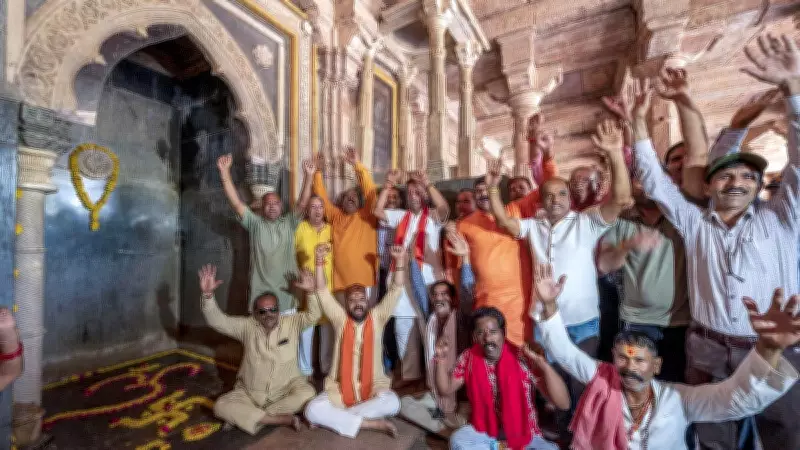
The Archaeological Survey of India (ASI) has allowed Hindus unrestricted access to the Bhojshala complex in Dhar district, Madhya Pradesh, following a directive from the Madhya Pradesh High Court. The High Court, in its order on Friday, also quashed the ASI's April 7, 2003 order that had permitted Muslims to offer Friday prayers at the site.
Background of the Dispute
The Bhojshala complex, a historic structure, has been a subject of contention between Hindu and Muslim communities. Hindus claim the site is a temple dedicated to Goddess Vagdevi, while Muslims assert it houses a mosque. The ASI's 2003 order had allowed Muslims to pray at the complex on Fridays, a practice that continued until the recent court ruling.
High Court's Decision
The Madhya Pradesh High Court, while hearing a petition, ruled that the 2003 order was unsustainable in law and quashed it. The court directed the ASI to ensure that Hindus have unrestricted access to the site for worship. The decision is seen as a significant victory for the Hindu community, which has long sought full access to the complex.

Reactions and Implications
Hindu groups have welcomed the order, with many planning to visit the site for prayers. Muslim organizations have expressed disappointment, stating that the decision disrupts a long-standing practice. The ASI has been directed to implement the court's order and maintain law and order at the site. Legal experts suggest that the ruling could set a precedent for other disputed religious sites in India.
History of Bhojshala
Bhojshala, built by King Bhoja in the 11th century, is a protected monument under the ASI. Over the centuries, the site has seen various uses, including as a mosque during the Mughal period. The current dispute dates back to the 1990s when both communities began asserting their claims. The ASI's 2003 order was an attempt to manage the site by allowing both communities limited access.
Legal and Administrative Steps
The High Court's order is final, and the ASI has been instructed to comply immediately. The state government has been asked to provide security to prevent any untoward incidents. The ASI is also expected to carry out necessary repairs and maintenance at the complex, ensuring its preservation as a heritage site.
The decision marks a pivotal moment in the ongoing religious and legal battles over India's historic sites, highlighting the delicate balance between heritage conservation and religious practices.