Anand Ranganathan Condemns Supreme Court's 'Judicial Overreach' in NCERT Textbook Dispute
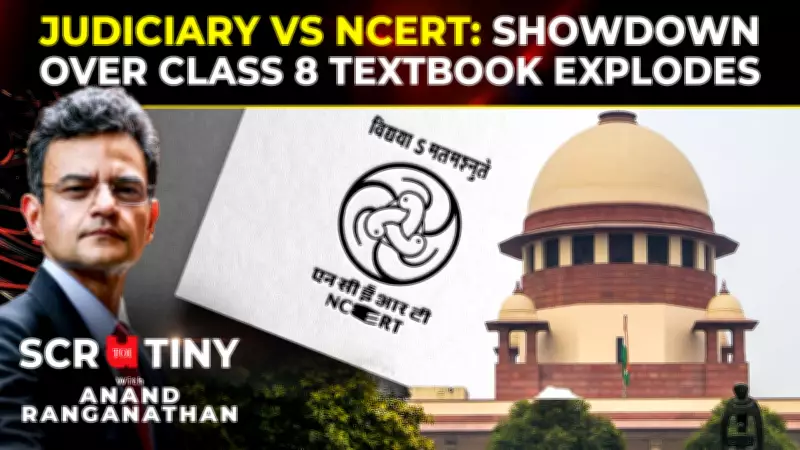
In a recent episode of his show Scrutiny, commentator Anand Ranganathan has ignited a fierce debate by labeling the Supreme Court's intervention in an NCERT textbook controversy as a clear instance of "judicial overreach." The controversy centers on a chapter in the Class 8 textbook that discusses corruption within the judiciary, which drew sharp criticism from the apex court.
Supreme Court's Directive to Remove Three Experts
The Supreme Court directed the Central government and the National Council of Educational Research and Training (NCERT) to remove three experts from any involvement in school curriculum development or state education bodies. The individuals barred are historian Michel Danino, educator Suparna Diwakar, and legal researcher Alok Prasanna Kumar, due to their association with the contentious chapter.
This chapter, which addresses judicial corruption, prompted the court to take action, leading to widespread discussion about the boundaries of judicial authority. Ranganathan argues that the court's move encroaches on academic freedom and raises critical questions about accountability within the judiciary itself.

Debate on Judicial Accountability and Academic Freedom
Ranganathan's critique highlights a broader concern: whether the judiciary should have the power to influence educational content and penalize experts for their scholarly contributions. He emphasizes that such actions could set a dangerous precedent, stifling open discourse and critical analysis in educational materials.
The episode delves into the implications of this directive, suggesting it may undermine the independence of academic institutions and the principle of separation of powers. Ranganathan calls for a reevaluation of how judicial bodies interact with educational frameworks, advocating for greater transparency and restraint.
Public and Legal Reactions
The controversy has sparked reactions from various quarters, including educators, legal experts, and the public. Many echo Ranganathan's concerns, viewing the Supreme Court's order as an overstep that could chill academic expression. Others defend the court's role in upholding ethical standards in education.
This incident underscores ongoing tensions between judicial oversight and academic autonomy in India, with potential ramifications for future curriculum development and freedom of speech in educational contexts.