Akhilesh Yadav's 'Saas-Bahu' Jibe Ignites Poetic Duel with Smriti Irani Over Women's Reservation Bill
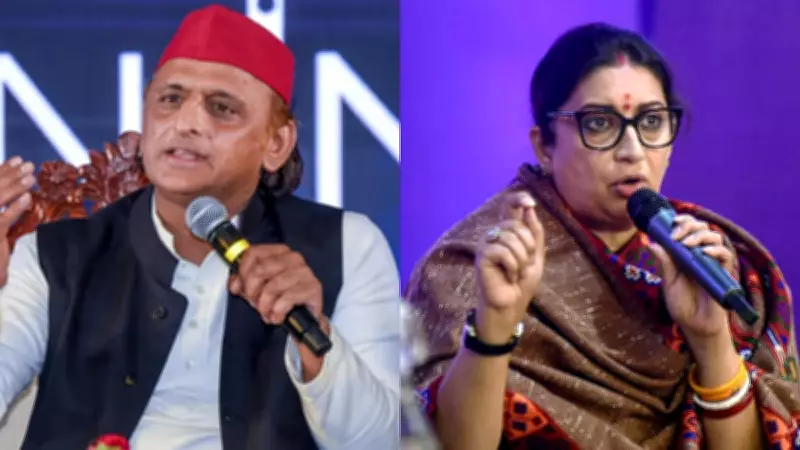
In a dramatic parliamentary session, Samajwadi Party leader Akhilesh Yadav's sharp 'saas-bahu' remark aimed at Union Minister Smriti Irani has triggered a poetic and political confrontation centered on the long-pending women's reservation bill. The exchange, which unfolded on April 17, 2026, highlighted deep-seated tensions and differing approaches to gender representation in Indian politics.
The Spark: Yadav's Television Serial Reference
Akhilesh Yadav, known for his witty and often pointed commentary, made a reference to popular Indian television serials involving mother-in-law and daughter-in-law dynamics, colloquially termed 'saas-bahu' dramas. This jibe was directed at Smriti Irani during discussions on the women's reservation bill, a legislative proposal aimed at reserving seats for women in Parliament and state assemblies.
The context of the remark remains rooted in ongoing debates over the bill's implementation and political will. Yadav's comment was perceived as a critique of what he views as superficial or dramatized approaches to women's issues, drawing parallels to the exaggerated conflicts often depicted in TV serials.

Irani's Retort: A Call for Parliamentary Focus
In response, Smriti Irani, a prominent BJP leader and former television actress herself, fired back with a poetic and firm rebuttal. She urged Akhilesh Yadav to "stop watching serials and instead focus on the proceedings in Parliament." Irani emphasized the need for constructive dialogue and action to pass the women's quota bill, which has faced delays and political hurdles for years.
Her message was clear: divert attention from trivial analogies and prioritize legislative progress. Irani's retort not only defended her stance but also underscored the urgency of advancing women's representation in Indian democracy, a cause she has long championed.
The Broader Implications for Women's Reservation
This poetic duel between two influential political figures brings to the forefront the critical issue of the women's reservation bill. Key points include:
- Historical Context: The bill, first introduced in 1996, seeks to reserve 33% of seats for women in legislative bodies, yet it has languished due to political disagreements and lack of consensus.
- Current Stakes: With increasing calls for gender equality in governance, the exchange highlights the partisan divides and rhetorical strategies that often overshadow substantive debate.
- Public Reaction: The incident has sparked discussions on social media and news platforms, with many viewing it as a reflection of how women's issues are sometimes trivialized in political discourse.
As the debate continues, the focus remains on whether such exchanges will galvanize support for the bill or further entrench political positions. Both Akhilesh Yadav and Smriti Irani represent larger factions within Indian politics, and their clash underscores the complex interplay of personality, policy, and poetry in shaping national conversations.