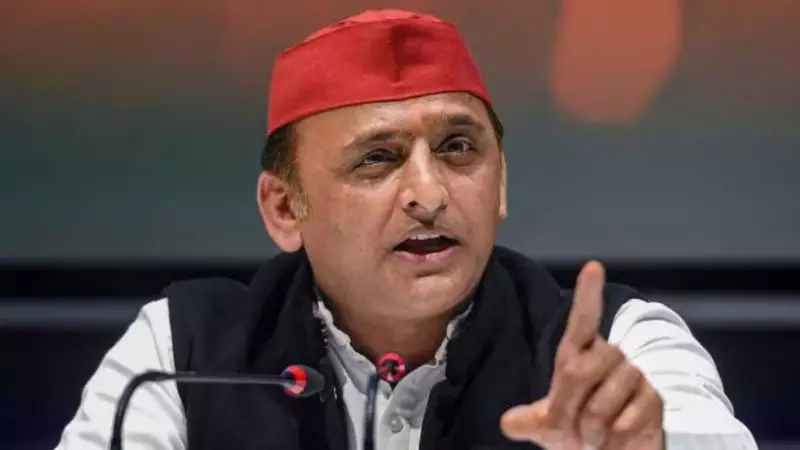
Samajwadi Party (SP) president Akhilesh Yadav has issued a dire warning, directly linking the survival of Delhi-NCR to the protection of the Aravalli mountain range. In an open letter addressed to the residents of the capital, the former Uttar Pradesh Chief Minister called for a united stand against the threat of illegal mining, which he argues is being facilitated by a recent legal definition.
The Supreme Court Ruling and Its Implications
The catalyst for Yadav's urgent appeal is a significant legal development. On November 20, 2025, the Supreme Court accepted the Centre's definition of the Aravalli hills. This definition, as highlighted by Yadav, states that hills in the range with elevations below 100 meters will not be subject to mining restrictions. The SP chief perceives this as a loophole that could lead to widespread ecological destruction under the guise of legality.
Extending his full support to the 'Save Aravalli' campaign, Yadav framed the issue in stark, survivalist terms. He described the ancient range as a "God-given barrier for Delhi-NCR" and asserted that preserving it is "not an option, but a necessity." His core argument is unambiguous: "Only if the Aravalli range survives will the National Capital Region survive."

Why the Aravallis Are Delhi's Lifeline
In his letter, Yadav detailed the multifaceted role the Aravallis play in sustaining the capital region. He emphasized that the range is not just a scenic backdrop but a critical ecological shield. Its importance includes:
- Acting as a natural barrier that reduces the influx of dust and air pollution into Delhi.
- Playing a vital role in groundwater recharge and water conservation.
- Influencing local rainfall patterns and preserving regional biodiversity.
- Having the potential to "restore the stars that have vanished from Delhi’s skies."
"Saving the Aravalli range means saving the future of Delhi," Yadav wrote. He painted a grim picture of the alternative, warning that Delhi's residents, already struggling for clean air, would never escape deadly smog conditions. He pointed out that pollution is having its most severe impact on the most vulnerable: the elderly, the sick, and children.
Economic and Social Collapse: A Stark Warning
Yadav's warnings extend beyond environmental concerns to a forecast of comprehensive socio-economic decline for the capital. He argued that unchecked pollution would cripple Delhi's status as a hub for commerce, tourism, and culture.
"If this continues, Delhi will lose its importance as the largest market and economic centre of North India," he stated. He predicted that both foreign and domestic tourists would stop visiting, and major international events like the Olympics or Commonwealth Games would bypass the city. Political, academic, and cultural conferences would cease to be held there.
The ripple effect, according to Yadav, would devastate local businesses: "The hotels, restaurants, taxis, guides, handicraft businesses, and all other economic and social activities here will be on the verge of collapse." He posed a poignant question: "When flights are grounded due to pollution, trains are delayed for hours, and road transport becomes unsafe, who will come to Delhi?"
Yadav directly accused the ruling BJP of a "conspiracy to legalise illegal mining" driven by "endless greed for land." He cautioned that this path would transform the national capital into the "'pollution capital' of the world," eventually forcing people to abandon the city.
Concluding with a call to action, the SP leader appealed to every citizen, educational institution, trader, and family to join the 'Save Aravalli' movement. His final message was a simple, powerful refrain: "Saving the Aravalli means saving ourselves."