Former Minister Mani Shankar Aiyar Clarifies Controversial Remarks on PM Modi
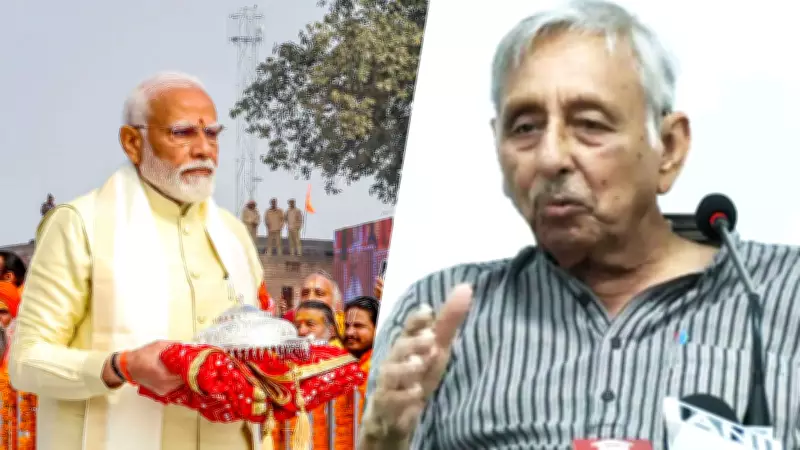
Former Union Minister Mani Shankar Aiyar has issued a strong rebuttal to criticism from Bharatiya Janata Party leaders and Prime Minister Narendra Modi, clarifying his earlier comments that sparked political controversy. Aiyar asserted that his statements about the Prime Minister were deliberately misrepresented, and he denied making certain allegations attributed to him in media reports.
Defending His Position and Questioning Political Narratives
Aiyar took aim at what he described as politically motivated narratives surrounding Prime Minister Modi's background, suggesting that these stories are crafted to serve specific agendas. He expressed deep concern over attempts to spread communal divisions within Indian society, warning that such tactics could undermine national unity.
The former minister specifically addressed the concept of India as a "Hindu nation," arguing that this portrayal poses significant risks to the country's diverse social fabric. He emphasized that India's strength lies in its secular constitution and pluralistic traditions, which he believes are being threatened by majoritarian politics.

Concerns Over Religious Symbolism and Secularism
Aiyar raised pointed questions about Prime Minister Modi's involvement in the inauguration of the Ram Mandir in Ayodhya, questioning the implications of such religious symbolism for India's secular principles. He suggested that the blending of religious ceremony with state authority creates dangerous precedents that could marginalize minority communities.
The former diplomat turned politician also criticized ongoing debates around triple talaq and so-called "love jihad," describing these issues as politically manufactured controversies. "These debates are not about social reform or protection," Aiyar stated, "but rather tools to deepen religious polarization for electoral gain."
Warning Against Social Polarization
Aiyar expressed alarm at what he perceives as increasing social and religious divisions in contemporary India. He argued that political discourse has become dangerously polarized, with genuine policy discussions being overshadowed by identity-based rhetoric.
The former minister concluded with a call for renewed commitment to India's constitutional values, emphasizing that the country's future depends on maintaining its secular, democratic character against what he views as rising majoritarian tendencies.