London Dreamliner Incident Raises Critical Questions About Air India Crash Investigation
In a development with significant implications for aviation safety investigations, another Air India Boeing 787 Dreamliner has experienced a concerning fuel control switch malfunction. This incident directly challenges the ongoing investigation into the fatal June 12 Air India crash in Ahmedabad, potentially shifting focus from pilot action to technical design flaws.
Heathrow Incident Details Reveal Safety Mechanism Failure
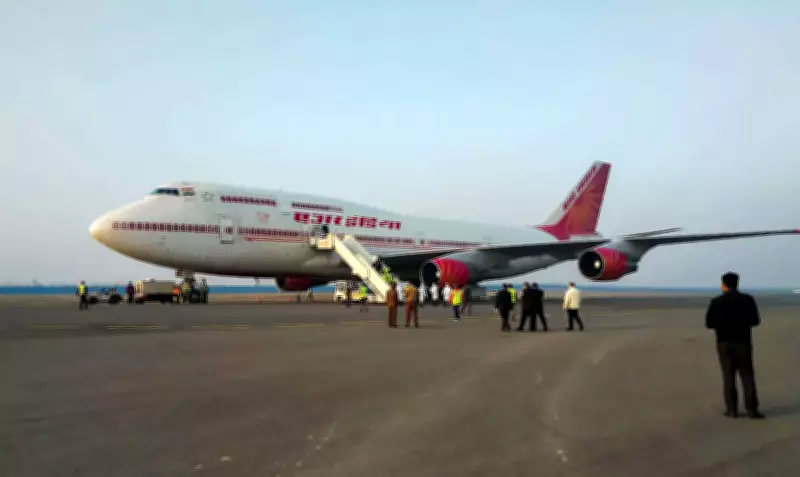
The incident occurred on February 1 at London Heathrow Airport during engine start procedures for Air India flight AI-132 to Bengaluru. Operating on Boeing 787 aircraft VT-ANX, scheduled for a 9:05 PM departure, the aircraft revealed a critical safety concern.
According to aviation sources, a crew member pressed the fuel control switch to verify its locking mechanism. The switch unexpectedly moved from "run" to "cut-off" position without the required lift action. This two-step safety feature is specifically designed to prevent inadvertent fuel supply cutoff and accidental engine shutdown.

"The pilot lightly pushed the left fuel control switch to check if its lock feature was working and found it was not because the switch moved though it was not lifted first," revealed an informed source. The locking mechanism failed twice during testing before functioning correctly on the third attempt.
Direct Challenge to Ahmedabad Crash Investigation Narrative
This London incident presents a direct challenge to the controversial narrative surrounding the June 12 Ahmedabad crash investigation. India's Aircraft Accident Investigation Bureau (AAIB) had previously indicated in its preliminary report that both fuel control switches on the ill-fated aircraft moved from "run" to "cut-off" seconds after takeoff.
The report documented one pilot asking another why he had cut off the fuel, with the responding pilot denying any such action. While the AAIB report stated that no technical or design flaws had been identified with the aircraft at that time, the London incident raises serious questions about this conclusion.
Aviation Experts Voice Serious Concerns
A senior commander emphasized the significance of this development: "The London incident directly challenges the assumption that fuel switch movement in the Air India crash was manual. Until now, the cut-off transition was treated as near-conclusive evidence of pilot action."
The commander further explained that the incident demonstrates uncommanded switch behavior through mechanical detent failure or other causes represents a credible failure mode. This places earlier regulatory claims of fleet clearance under sharp scrutiny, suggesting inspections may have been visual, non-diagnostic, or incomplete.
Air safety expert Captain Amit Singh highlighted additional concerns: "The London incident is particularly concerning because in 2018 the US aviation regulator cautioned that fuel control switches on Boeing 787s could malfunction and lead to inadvertent engine shutdown."
Singh emphasized that this incident, occurring after Air India declared its fleet's fuel control switches had been checked, raises serious questions about inspection adequacy and demands the highest level of regulatory scrutiny.
Regulatory Response and Airline Actions
Following the Ahmedabad crash investigation, the Directorate General of Civil Aviation (DGCA) mandated inspections of fuel switch locking systems across Air India's fleet. The airline subsequently announced completion of these inspections with no faults identified.
However, the London incident has brought unresolved questions about switch design, locking integrity, and potential for inadvertent activation back to the forefront of aviation safety discussions.
Air India issued a statement confirming awareness of the reported defect: "We are aware that one of our pilots has reported a possible defect on the fuel control switch of a Boeing 787-8 aircraft. After receiving this initial information, we have grounded the said aircraft and are involving the OEM to get the pilot's concerns checked on a priority basis."

The airline confirmed the matter has been communicated to the DGCA and reiterated that previous fleet-wide inspections had revealed no issues. Boeing representatives stated they are in contact with Air India and supporting the review of this matter.
Broader Implications for Aviation Safety
This incident has significant implications for how aviation accidents are investigated and how safety mechanisms are evaluated. The aircraft involved in the London incident departed for Bengaluru at 9:40 PM and remains grounded there pending further investigation.
For investigators, the clear implication is that fuel cutoff can no longer be automatically equated with pilot intent. The investigation must now widen to include fleet-level and component analysis, with attribution of deliberate pilot action becoming indefensible without fully eliminating potential system anomalies.
The incident underscores the critical importance of thorough technical evaluations in aviation safety investigations and highlights how seemingly isolated incidents can have far-reaching implications for understanding previous accidents and preventing future tragedies.