Farooq Abdullah's Remarks on Kashmiri Pandits Trigger Political Storm
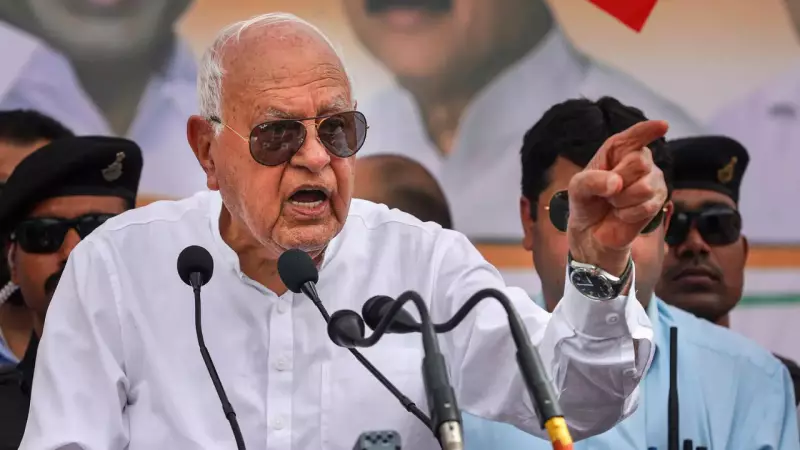
National Conference president and former Jammu and Kashmir chief minister Farooq Abdullah made controversial statements on Monday regarding the return of Kashmiri Pandits to the valley. Speaking to reporters in Jammu, Abdullah asserted that nobody is preventing Pandits from coming back to their homeland. However, he expressed skepticism about most displaced families choosing to resettle permanently in Kashmir.
"Kashmir Is Their Home" Says Abdullah
"When are they going back? Who has stopped them?" Abdullah asked rhetorically during his media interaction. He emphasized that Kashmir remains the home of Kashmiri Pandits and they possess complete freedom to return whenever they wish. The veteran politician pointed out that many Pandit families never left the valley during the turbulent periods and continue to live there peacefully.
Abdullah explained his doubts about large-scale permanent return by citing practical considerations. "They may come as visitors, but I don't think they will return to live," he stated. The former chief minister mentioned factors like advancing age, health concerns, and children who have established themselves in education and careers elsewhere as reasons why displaced families might prefer to maintain their current lives outside Kashmir.

BJP Leaders Launch Sharp Criticism
Abdullah's comments immediately drew fierce criticism from Bharatiya Janata Party politicians in Jammu and Kashmir. BJP's state unit accused the National Conference leader of evading responsibility for the mass exodus of Kashmiri Pandits during the 1990s. Party spokesperson and former MLC GL Raina, who belongs to the Kashmiri Pandit community, strongly contested Abdullah's characterization of the migration.
Raina emphasized that the community's flight—estimated to involve approximately 200,000 people—was forced rather than voluntary. "The exodus was not voluntary but forced at gunpoint," Raina asserted, referring to targeted killings of Kashmiri Pandits between 1987 and 1989. He described Abdullah's remarks as an attempt to dilute political accountability for the tragic events that unfolded during that period.
Highway Blocked by Protesting Pandit Groups
Meanwhile, Kashmiri Pandit activists took to the streets in response to Abdullah's statements. Under the banner of Youth 4 Panun Kashmir, protesters blocked the crucial Jammu-Srinagar national highway near the Jagti camp in Jammu on Sunday evening. The demonstrators were demanding a separate homeland for the displaced community, highlighting ongoing tensions surrounding the issue of return and rehabilitation.
Abdullah Echoes AR Rahman on Communal Divisions
During the same interaction, Abdullah also referenced recent comments by music composer AR Rahman regarding alleged communal bias in India. The National Conference president warned that "a fire of hatred" is being deliberately stoked to divide Hindus and Muslims for electoral gains. He pointed to rising tensions in Jammu and referenced a recent decision by the National Medical Commission.
The commission withdrew permission for the Shri Mata Vaishno Devi Institute of Medical Excellence to admit 50 MBBS students for the 2025–26 academic year, officially citing deficiencies in infrastructure. However, Abdullah suggested the move followed BJP-led protests that occurred after Muslim students cleared the NEET examination. Chief Minister Omar Abdullah and the Peoples Democratic Party have made similar allegations regarding the medical college decision.
The controversy surrounding Farooq Abdullah's remarks underscores the deep sensitivities and unresolved issues related to the Kashmiri Pandit exodus, with political parties positioning themselves differently on matters of historical accountability and future reconciliation.