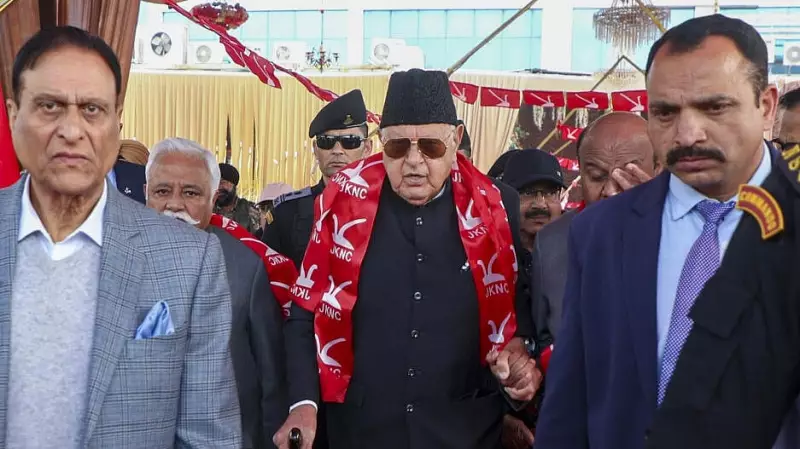
National Conference leader Farooq Abdullah made a significant statement about Kashmiri Pandits on Saturday. He questioned whether the community truly desires permanent residence in the Kashmir Valley.
Abdullah's Remarks During Party Event
Abdullah spoke to reporters during a two-day party program in Jammu and Kashmir. He shared his perspective on the ongoing discussions about Kashmiri Pandit rehabilitation.
"I don't think Kashmiri Pandits want to live in the Valley permanently," Abdullah told journalists. His comments came during informal conversations on the sidelines of the political gathering.

Highlighting Existing Kashmiri Pandit Presence
The veteran politician emphasized an important fact many people overlook. He pointed out that numerous Kashmiri Pandit families never actually left the Valley during difficult times.
"Many families stayed behind and continue living peacefully in their villages and localities," Abdullah noted. This statement challenges common narratives about complete displacement of the community.
Abdullah's observations suggest a more complex reality than often portrayed. His remarks come amid ongoing debates about rehabilitation programs and return initiatives for Kashmiri Pandits.
Context and Implications
The former chief minister's comments add a new dimension to discussions about Kashmir's social fabric. They highlight the diversity of experiences within the Kashmiri Pandit community itself.
Some families maintained their presence in the Valley throughout challenging periods. Others migrated to different parts of India and abroad. Abdullah's statement raises questions about uniform approaches to rehabilitation and return.
Political observers note that such remarks from senior leaders often influence policy discussions. They shape how government programs address the needs of displaced communities.
The National Conference has historically positioned itself as representing all communities in Jammu and Kashmir. Abdullah's comments reflect this inclusive approach while acknowledging ground realities.
As debates continue about Kashmir's future, such statements from experienced politicians provide valuable perspective. They remind us that simple narratives rarely capture complex social realities.